Denzel Washington’s Greatest Transformation: The Untold Sacrifice Behind His Legendary Role in Malcolm X (1992)
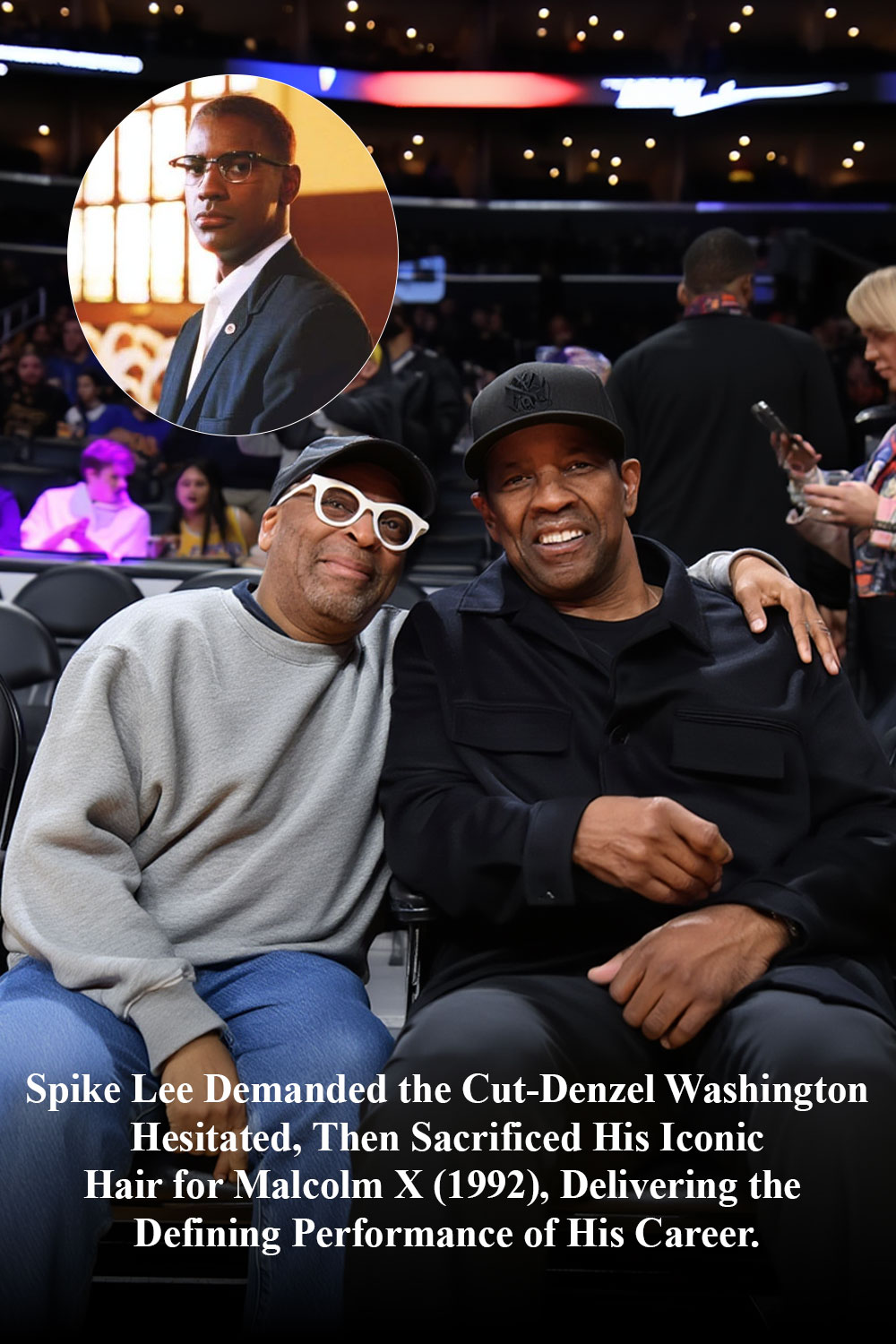
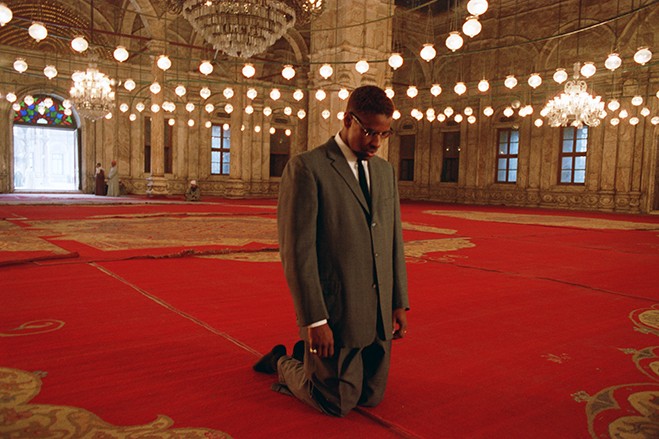

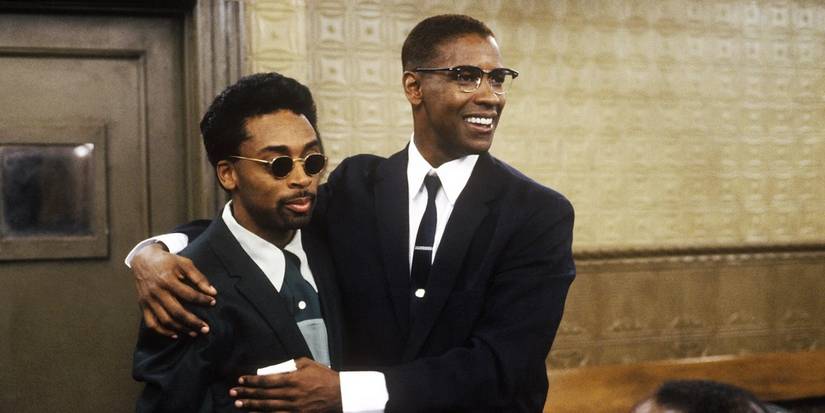
When audiences look back at Denzel Washington’s towering career, one performance stands apart — not just for its cinematic brilliance but for the sheer sacrifice, discipline, and vulnerability required behind the scenes. That role, of course, is Malcolm X in Spike Lee’s 1992 biographical epic, a film often cited as one of the most important in American cinema.
The final performance is seamless: magnetic, emotional, fiery, and deeply human. But behind that performance lies a lesser-known story — a story of a director’s uncompromising vision, an actor’s hesitation, and ultimately, a total surrender to the demands of art.
And remarkably, it all began with a single argument about hair.
“Spike Lee Demanded the Cut.” The Moment Everything Changed


In late 1991, as production ramped up, Spike Lee pulled Denzel Washington aside. Washington — already becoming an icon in Hollywood — had a signature look: thick, full, carefully styled hair that contributed to his leading-man image. It was familiar to audiences and key to his screen presence.
But Spike Lee had one blunt message:
To play Malcolm X, the hair had to go. All of it — the length, the texture, the “movie star” look.
Washington hesitated. Hair, especially for Black men in Hollywood during the early ’90s, carried cultural weight and personal identity. Losing it felt like surrendering part of his public persona.

But Lee insisted the transformation was essential for historical accuracy. Malcolm X’s life journey — from street hustler to Nation of Islam minister to global human rights icon — included a period where he chemically straightened his hair. A “conk,” as it was called, was more than a hairstyle; it was a painful symbol of assimilation, self-erasure, and internalized racism.
Spike didn’t want a wig.
He didn’t want movie magic.
He wanted Washington to endure what Malcolm endured.
And Washington finally agreed.
“It wasn’t about vanity anymore,” he later said. “It was about the truth.”
The Conk Scene: A Turning Point in Malcolm’s Life — and Denzel’s
One of the most unforgettable moments in the film is the “conk” sequence, where young Malcolm Little straightens his hair using lye — a corrosive chemical that could burn the scalp if mixed incorrectly. In the film, it’s comedic at first but quickly becomes painful, symbolic, and heartbreaking. Malcolm’s desperate attempt to conform becomes a visual metaphor for the internal struggle that defined his early years.
Spike Lee wanted this moment to feel brutally authentic.
And that meant Denzel Washington had to undergo the same multi-step chemical straightening — for real.
The dye.
The burn.
The smell.
The thinning hair.
Everything.
Washington later admitted that the chemicals were so harsh that his hair began to fall out in patches.
“It was too much chemical abuse,” he recalled. “Sometimes I had to wear a hat between scenes.”
But Washington understood the symbolism. The pain wasn’t just physical; it was historical. It was generational. It was embedded in Black identity in America.
Spike Lee’s insistence wasn’t just about realism — it was about honoring Malcolm X’s complicated past.
Beyond the Hair: A Transformation of Body, Spirit, and Identity
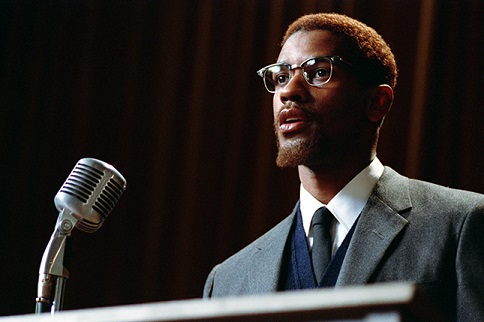

Most viewers know about the hair transformation, but fewer know how far Denzel Washington went physically and emotionally to disappear into Malcolm X.
He fasted extensively
To capture Malcolm’s lean, sharp appearance during his spiritual awakening, Washington undertook repeated fasts, causing his face to look more angular, his eyes deeper, his presence more intense. The change is visible on screen — a quiet, physical evolution mirroring Malcolm’s internal journey.
He wore custom prosthetics
Subtle pieces were applied to narrow his nose and adjust facial structure, not to erase Denzel but to more closely evoke Malcolm’s features. The transformation was so seamless that audiences forgot they were watching an actor.
He immersed himself in Malcolm’s speeches, cadence, and inner fire
Washington spent months studying Malcolm’s vocal rhythms, memorizing not just the words but the pulse of his oratory — the musical rise, the sudden emphasis, the razor-sharp clarity. Many speeches in the film weren’t lip-synced or copied; he delivered them from memory, in character, with staggering precision.
He underwent spiritual preparation
To capture the authenticity of Malcolm’s faith, Washington engaged in quiet reflection, prayer, and isolation during filming. It helped him portray the leader not just as a political figure but as a man wrestling with destiny, doubt, conviction, and transformation.
Spike Lee’s Uncompromising Vision


Spike Lee was adamant that Malcolm X would not be a sanitized Hollywood version of the story.
He wanted fire.
He wanted truth.
He wanted the rawness of history.
And he wanted Denzel Washington to push past the limits of comfort.
Lee’s approach was demanding, sometimes exhausting, and always exacting. But Washington has repeatedly credited him as the creative force who sharpened his performance into something unforgettable.
“Spike demanded everything from me,” Washington said. “And I gave it because the story deserved it.”
Lee’s vision extended beyond Washington’s transformation. The film shot on location in Harlem, in mosques, and even in Mecca — the latter requiring rare approval from Islamic authorities. Every detail of costume, lighting, and dialect was meticulously crafted to mirror the eras Malcolm lived through.
Lee was not just making a movie.
He was making a statement.
And Washington was at the center of it, carrying the weight of one of the most complex figures in American history.
The Toll and Triumph of Embodying a Legend
Though audiences saw strength, ease, and power in the final result, Washington described the role as emotionally exhausting. Malcolm X was not a character one could play lightly. His contradictions, pain, evolution, and eventual martyrdom required the actor to dig into psychological depths not often required in Hollywood roles.
Washington performed the final speech — the one delivered shortly before Malcolm’s assassination — in a single take, without cue cards. Crew members later said they were in tears. Spike Lee didn’t call “cut” for nearly a minute after Washington finished, letting the intensity linger on set.
The immersion came with a price. Washington later admitted that after filming wrapped, it took time to emotionally “come back” from being Malcolm.
But the reward was immense.
The performance stunned critics, audiences, and even people who had personally known Malcolm X. It earned Washington an Academy Award nomination for Best Actor — and many still argue he should have won.
A Performance That Redefined Biographical Cinema
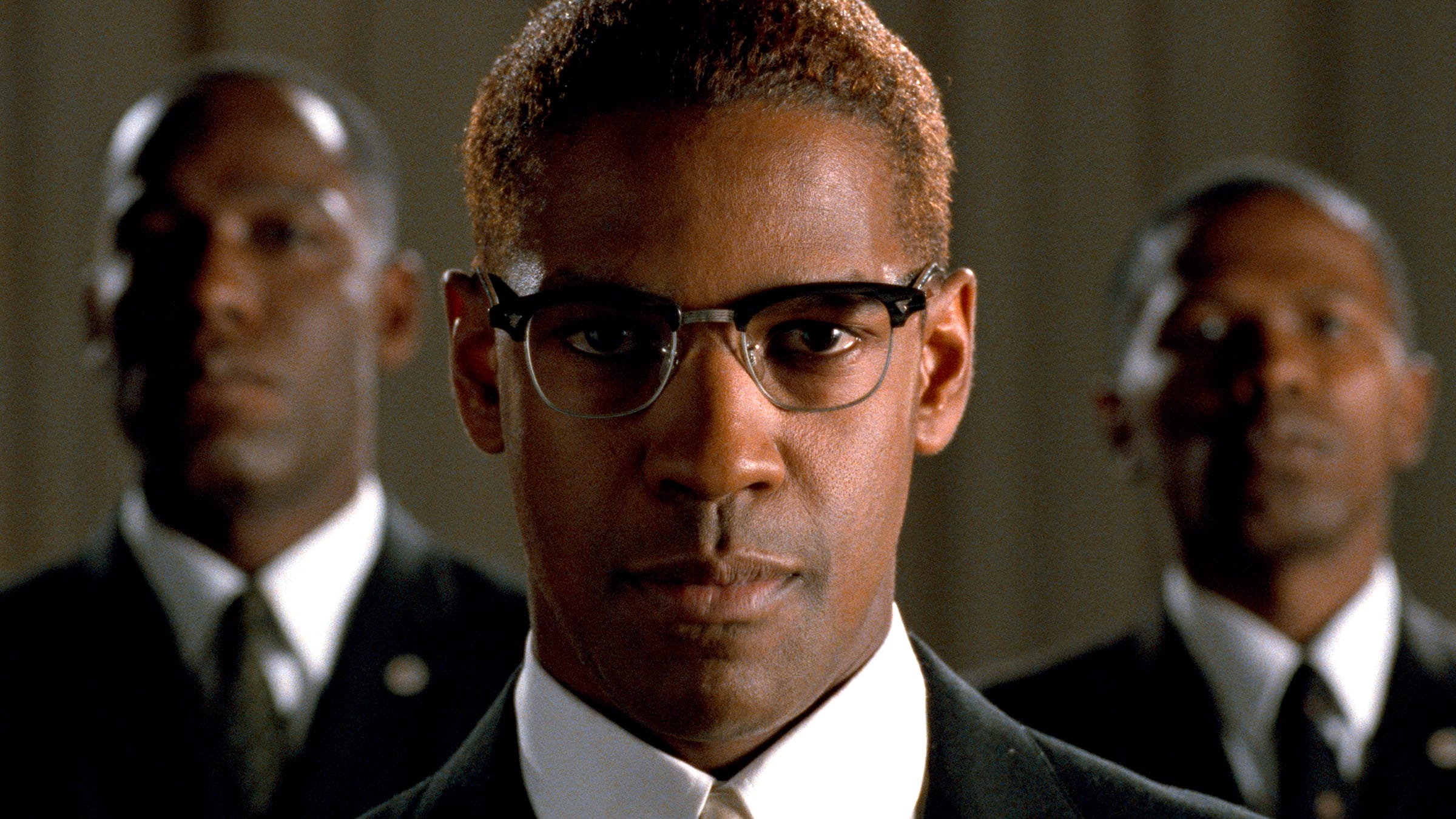
When Malcolm X premiered in November 1992, it wasn’t just a film release. It was an event — a cultural moment so powerful that theaters hosted community viewings, educators built curricula around it, and activists saw it as essential viewing.
Denzel Washington’s performance was universally praised as:
- “A spiritual possession” (CNN)
- “One of the greatest performances in film history” (Roger Ebert)
- “The defining portrayal of Malcolm X for generations to come” (The New York Times)
Washington didn’t just play Malcolm X.
He became Malcolm X.
And by agreeing to Spike Lee’s rigorous physical and emotional demands — including the now infamous hair transformation — Washington transcended the role of movie star. He became a vessel for a historical titan.
Why the Hair Still Matters — 33 Years Later
Looking back today, Washington’s sacrifice — letting go of vanity, comfort, and even parts of his public identity — remains a powerful reminder of what true artistry requires.
Actors often undergo physical transformations, but few do so with the same cultural significance.
The “conk” wasn’t merely a hairstyle.
It was a history lesson.
A symbol of assimilation.
A window into racial identity in mid-20th-century America.
By experiencing the painful process himself, Washington wasn’t just acting.
He was honoring Malcolm X’s journey from self-denial to self-realization.
33 years later, that choice still resonates.
Legacy: A Role That Defined a Generation — and an Actor
Denzel Washington has played many iconic roles — from Training Day to Glory, Fences, and The Equalizer. But Malcolm X remains the role most often described as his masterpiece.
It solidified him not only as one of the greatest actors of his generation but as an artist willing to give everything — even his physical comfort and public image — in service of truth.
Spike Lee demanded authenticity.
Denzel Washington delivered a transformation for the ages.
And in doing so, he created a performance that continues to educate, inspire, provoke, and move audiences more than three decades later.
A performance born not from vanity —
but from sacrifice.