Sandra Bullock and The Blind Side (2009): A Defining Role of Heart and Strength
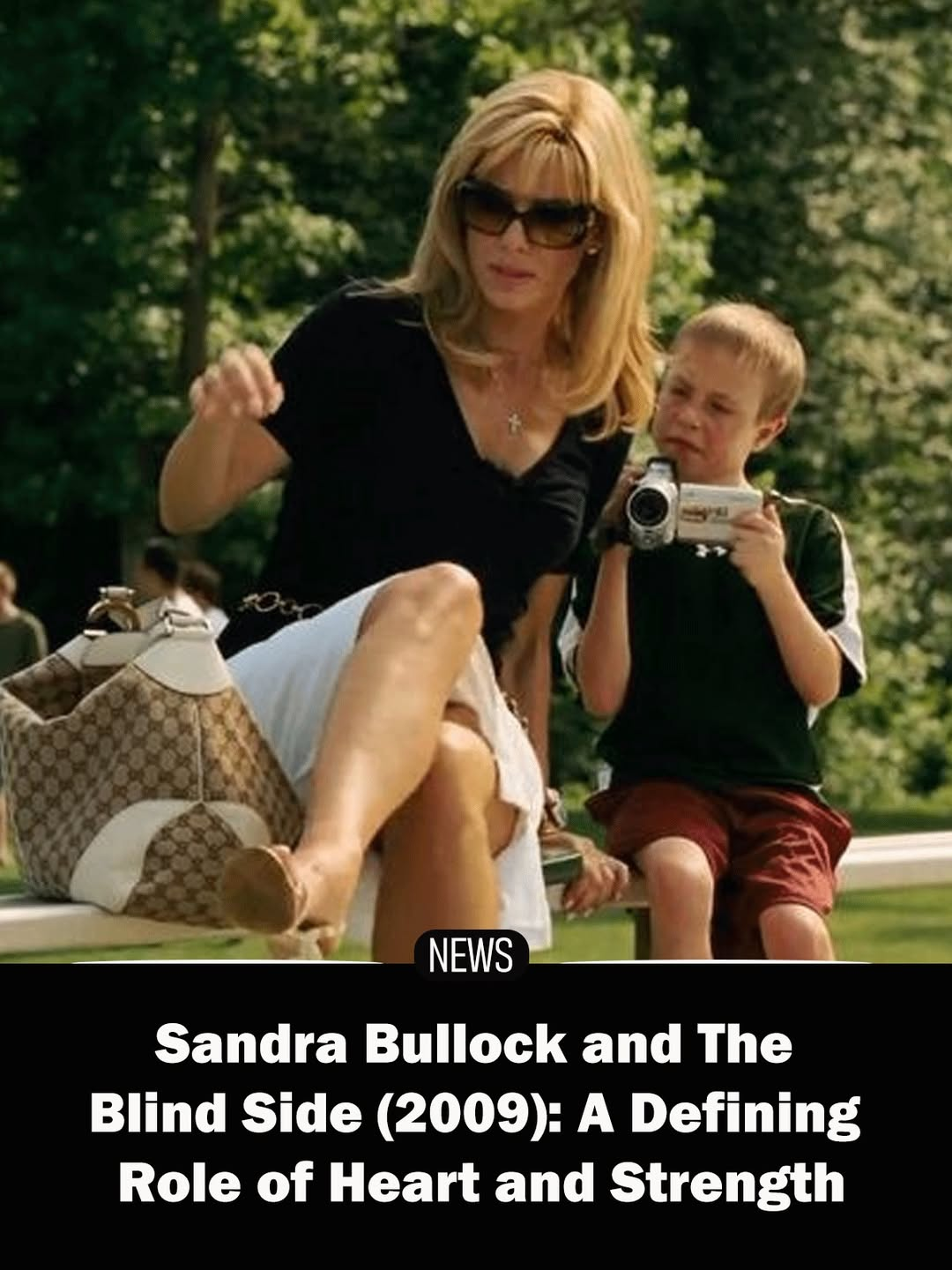
When Sandra Bullock stepped into the role of Leigh Anne Tuohy in The Blind Side, she didn’t just star in a successful sports movie—she reshaped how audiences understood strength, compassion, and leadership on screen. Released in 2009, The Blind Side became a cultural phenomenon, blending sports, family, and social consciousness into a story that resonated far beyond the football field.
At its core, the film tells the true story of Michael Oher, a homeless teenager who, through the intervention of the Tuohy family, discovers not only his potential as an athlete but also his sense of belonging. While football provides the framework, it is Bullock’s performance that gives the film its emotional heartbeat.
Leigh Anne Tuohy: Strength Redefined
Leigh Anne Tuohy is not portrayed as gentle or sentimental. Instead, Bullock presents her as sharp, decisive, outspoken, and fiercely protective—someone who acts first when she senses injustice. From her commanding presence in private school hallways to her fearless confrontations on the football field sidelines, Leigh Anne is a woman who refuses to be intimidated by social norms or expectations.
Bullock’s portrayal avoids clichés. Leigh Anne is compassionate, but not soft. She is loving, but unapologetically direct. This balance is what makes the character so compelling. The film shows that kindness does not always come quietly—it can arrive with conviction, confidence, and an unshakable sense of right and wrong.
A Performance Rooted in Emotional Truth
One of Bullock’s greatest strengths as an actress has always been her emotional authenticity, and The Blind Side showcases this at its peak. She brings warmth to Leigh Anne without romanticizing her actions, allowing the audience to see both her generosity and her imperfections.
The relationship between Leigh Anne and Michael Oher unfolds gradually and naturally. Bullock’s subtle expressions—moments of concern, frustration, pride, and protectiveness—build a believable bond that anchors the film. Her performance ensures that Michael is never treated as a “project,” but as a young man deserving dignity, opportunity, and care.
This emotional honesty is what elevates The Blind Side from a typical inspirational sports film into something more human and enduring.
Beyond Football: A Story About Choice and Responsibility
While the film features high school football and the rise of Michael Oher as a promising athlete, its deeper message lies in personal responsibility and moral courage. Leigh Anne’s decision to intervene in Michael’s life is not framed as heroic in a grand sense—it is portrayed as a simple, necessary act of humanity.
Bullock captures this philosophy perfectly. Her Leigh Anne doesn’t seek praise or recognition. She acts because she believes it is the right thing to do. This grounded approach makes the film’s themes—empathy, privilege, and social awareness—feel accessible rather than preachy.
An Oscar-Winning Transformation
Sandra Bullock’s performance in The Blind Side earned her the Academy Award for Best Actress, marking a pivotal moment in her career. Known previously for romantic comedies and action films, Bullock used this role to demonstrate her dramatic range and depth.
The Oscar win was not just a personal triumph—it validated her ability to carry a serious, socially conscious film while remaining deeply relatable. Critics and audiences alike praised her for transforming Leigh Anne Tuohy into one of the most memorable female characters of the decade.
The success of The Blind Side also solidified Bullock’s status as one of Hollywood’s most versatile and respected leading actresses.
Cultural Impact and Lasting Legacy
More than a decade after its release, The Blind Side remains a frequently revisited and discussed film. Its themes of inclusion, opportunity, and moral courage continue to resonate with audiences across generations.
Sandra Bullock’s Leigh Anne Tuohy stands as a reminder that strength does not require aggression, and leadership does not require authority. Sometimes, the most powerful act is simply showing up for someone when no one else will.
The film’s enduring popularity speaks to Bullock’s ability to create characters that feel real—women who are flawed, forceful, compassionate, and unforgettable.
Conclusion: Why The Blind Side Still Matters
The Blind Side is not just a sports drama, and Sandra Bullock’s performance is not just award-winning—it is defining. Through Leigh Anne Tuohy, Bullock reimagined what cinematic strength looks like: decisive without cruelty, compassionate without sentimentality, and powerful without dominance.
Her portrayal transformed the film into a story about choosing empathy, standing firm in one’s values, and understanding that real change often begins with a single, courageous decision.
More than a decade later, The Blind Side endures as one of Sandra Bullock’s most meaningful works—proof that when heart and strength align, the impact can last a lifetime.