🎬 AWARDS & CULTURE NEWS | A Quiet Tribute Only True Fans Would Catch
🎬 AWARDS & CULTURE NEWS | A Quiet Tribute Only True Fans Would Catch
Hollywood knows how to be loud. It knows how to announce, to underline, to make meaning unmistakable with swelling music and carefully scripted speeches. But at the Golden Globe Awards in 2026, one of the most affecting moments of the night arrived without fanfare—so subtle that only longtime fans immediately understood what had happened.
There was no title card.
No montage.
No formal announcement.
Just a hat.
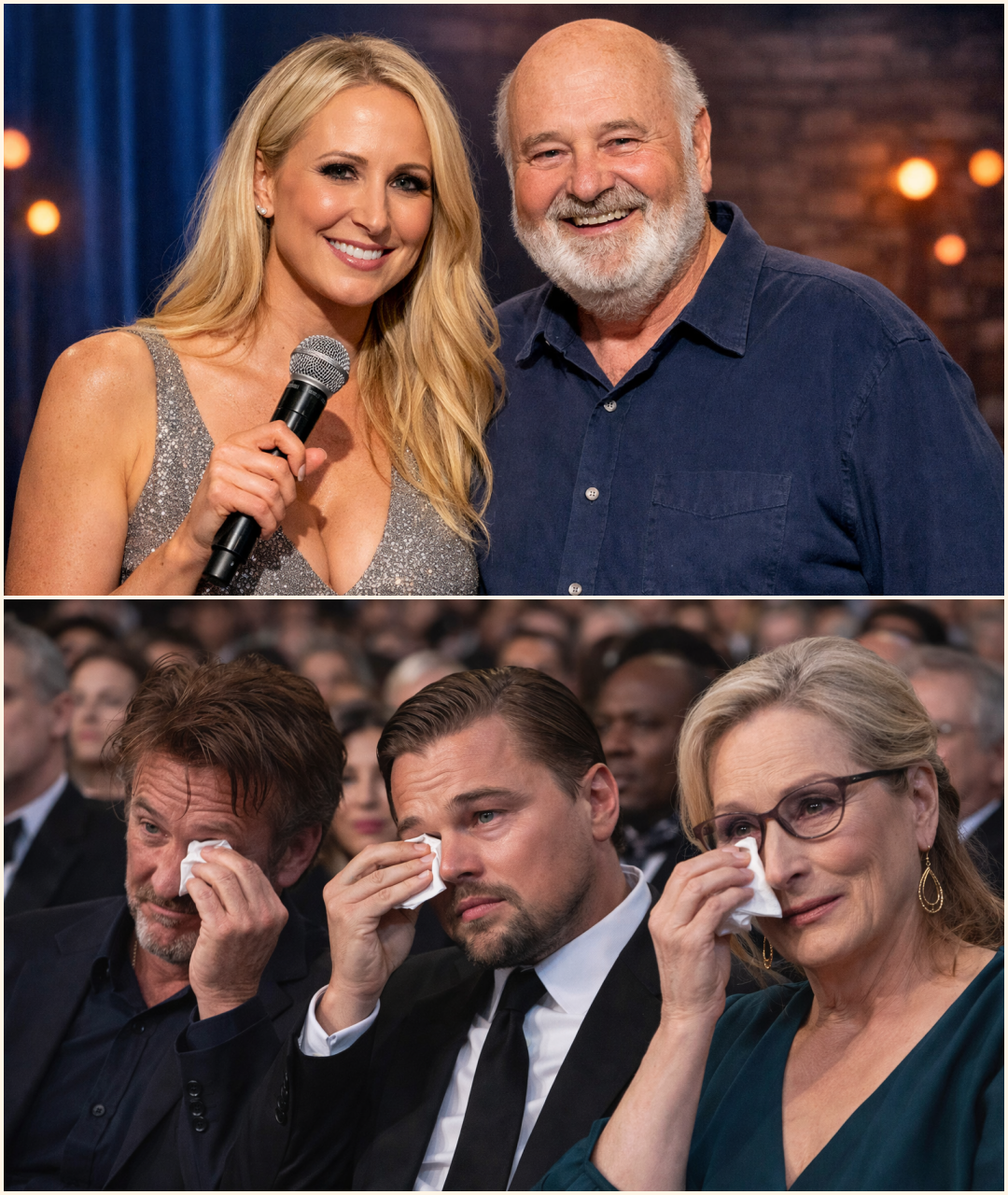
As the ceremony drew to a close, host Nikki Glaser stepped back onto the stage wearing a Spinal Tap baseball cap—a visual cue so understated it might have passed unnoticed by casual viewers. But for those who knew the history, the reference landed instantly. It was a quiet, unmistakable nod to Rob Reiner, whose legacy is inseparable from the cultural DNA of Spinal Tap.
No Explanation Required
In an industry that often explains itself to exhaustion, the restraint was striking. There was no in-memoriam segment spelling out Reiner’s achievements. No narrated tribute summarizing a career that helped define modern American comedy and storytelling. Instead, Glaser trusted the audience—at least part of it—to connect the dots on their own.
And then came the lines.
To close the night, Glaser delivered two quotes that landed with quiet precision, lifted directly from This Is Spinal Tap:
“That’s our show. This one went to 11.”
A brief pause followed. Just long enough.
“I hope we found the line between clever and stupid.”
For fans of Spinal Tap, the meaning was unmistakable. These weren’t jokes inserted for easy applause. They were signposts—signals aimed at a specific audience who understood the weight behind the words.
A Promise Kept
Earlier in the evening, Glaser had hinted that she planned to honor Reiner “in my own way,” describing what she had in mind as delicate. That description proved accurate. There was no attempt to control the room’s emotions or instruct viewers on how to feel. The tribute relied on recognition rather than revelation.
Those who knew, knew.
Those who didn’t, simply saw a host closing the show with wit and confidence.
In a medium that often demands clarity at all costs, the decision to leave space for interpretation felt almost radical.
Why Spinal Tap Matters
This Is Spinal Tap is more than a cult comedy. Released in 1984, it quietly rewired how humor, satire, and authenticity could coexist on screen. Its influence stretches across film, television, music, and even language itself. Phrases like “goes to 11” entered the cultural lexicon, shorthand for excess, ambition, and absurdity—used by people who may never have seen the film, but still feel its echo.
Rob Reiner’s role in creating that world helped establish him as a filmmaker willing to trust audiences, to let jokes breathe, and to find comedy in precision rather than volume. The Golden Globes tribute mirrored that philosophy perfectly.
The Power of Understatement
Awards shows are often accused of being self-important, overly sentimental, or disconnected from the audiences they serve. This moment cut against that grain. By refusing to announce itself, the tribute avoided spectacle and leaned into intimacy.
There was no attempt to canonize Reiner in the moment. No framing of legacy or finality. Just acknowledgment—quiet, respectful, and confident enough to stand without explanation.
Broadcast professionals later noted how rare it has become for a live awards show to trust silence. In an era dominated by instant reactions and social media clips, the choice to be subtle carried risk. It also carried meaning.
A Room That Understood
Those inside the room felt it immediately. You could see it in the faces—small nods, half-smiles, a collective recognition that something had just been said without being spoken. The laughter that followed wasn’t explosive. It was warm. Knowing.
For a moment, the room felt like a shared secret.
That intimacy—between host, honoree, and audience—is difficult to manufacture. It requires confidence not only in the material, but in the people receiving it. Glaser’s decision suggested a deep respect for both.
A Different Kind of Goodbye
What made the tribute resonate most strongly was what it did not declare. It didn’t frame itself as a farewell or a final word. It didn’t instruct the audience to mourn or celebrate. It simply recognized a legacy that had already done its work.
In doing so, it echoed a truth many creatives understand: the most meaningful goodbyes are rarely announced. They arrive quietly, carried by shared memory and mutual respect.
Industry Reaction
In the hours after the ceremony, discussion focused less on headlines and more on interpretation. Social media posts from filmmakers, comedians, and critics pointed out the hat, the quotes, the restraint. Many praised the moment for honoring intelligence over spectacle.
Some viewers admitted they hadn’t noticed the tribute at all—until someone explained it to them. Others said that discovering it later made it even more powerful. The meaning didn’t expire with the broadcast; it deepened with reflection.
Why It Matters Now
At a time when awards shows struggle to remain culturally relevant, moments like this offer a different path forward. Instead of chasing virality, they lean into craft, history, and shared understanding. They remind audiences that not every moment needs to be optimized for maximum reach to be meaningful.
In fact, sometimes meaning grows precisely because it isn’t spelled out.
Final Thoughts
The tribute to Rob Reiner at the 2026 Golden Globes wasn’t designed to trend. It was designed to be recognized. And in that recognition, it achieved something rare: a moment of genuine connection between past and present, creator and audience.
No montage.
No speech.
No explanation.
Just a hat, two lines, and a room full of people who understood exactly what was being said.
🎬 Sometimes the most meaningful goodbyes don’t need to be announced.
They just need to be noticed.