Safe House (2026)
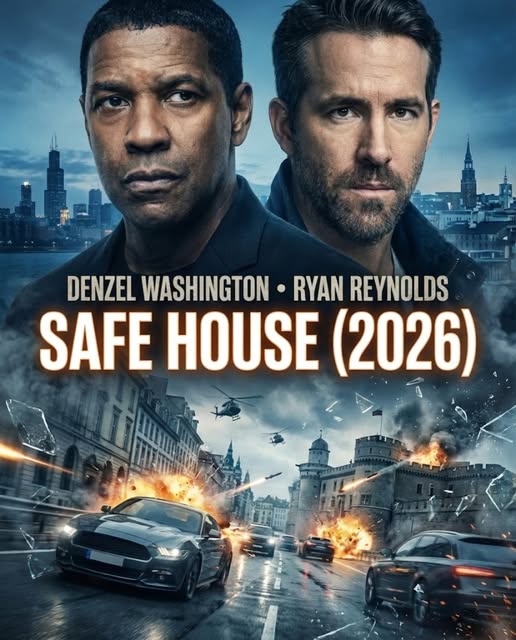
Introduction to the Movie “Safe House” (2026): A Gripping Thriller Full of Tension and Twists
Hey movie lovers! Today, I want to introduce you to a fresh American thriller that hit screens at the end of 2026 called Safe House. Don’t confuse it with the 2012 action classic starring Denzel Washington and Ryan Reynolds—this 2026 version is a completely different story, focusing on paranoia, betrayal, and high-stakes psychological tension in a confined space. Directed by Jamie Marshall, this 90-minute film was released by Vertical on October 31, 2026—perfect timing for Halloween to amp up the suspense. With a modest budget but clever ideas, “Safe House” quickly caught the attention of fans of action-thriller hybrids. In this post, I’ll give you a full, detailed rundown: plot summary, cast, production team, reviews, and key highlights. Hopefully, this helps you decide if it’s worth your time!
Plot Summary: Tension from Inside and Outside
The film kicks off with an intense action sequence: a brutal ambush on the Vice President’s motorcade in downtown Los Angeles. Explosions, gunfire everywhere, and many Secret Service agents are killed. Six agents from different agencies—Secret Service, CIA, Department of Defense, and Homeland Security—rush to a nearby high-security safe house, a fortified location designed to withstand external attacks, complete with automatic locks, surveillance cameras, and backup weapons.
But things spiral quickly. Communications are cut, the building locks down completely, and they discover that signals for citywide terrorist attacks are originating from inside their own location. Now, they face threats from both outside enemies surrounding the building and a potential traitor among them. Who is the insider leaking information? Who’s hiding deadly secrets?
The story unfolds as a classic “locked-room mystery” (similar to The Thing or Reservoir Dogs), blended with modern action elements—gunfights, hand-to-hand combat, and explosive surprises. A key plot driver is the “nuclear football” (the briefcase with nuclear launch codes) and a biometric-linked device tied to the Vice President, raising the stakes to national catastrophe levels. Without spoiling too much, the pacing is fast, full of unexpected twists that keep you guessing until the end. While there are some plot conveniences (like delayed rescue forces), the overall narrative is engaging, especially for fans of tight, no-nonsense thrillers.
Main Cast: Talented Rising Stars and Memorable Performances
The film shines thanks to its diverse, capable cast mixing up-and-coming stars with familiar faces. Lucien Laviscount plays Anderson, the mysterious CIA-linked “housekeeper” of the safe house. Known from Emily in Paris, Laviscount brings charm and emotional depth, though some critics felt his action scenes were underused.
Hannah John-Kamen stars as Agent Owens from the Department of Defense—a tough, decisive former Army Ranger. Seen in Ant-Man and the Wasp and Resident Evil: Welcome to Raccoon City, she excels in intense dialogue and inner conflict scenes.
Lewis Tan portrays Agent Choi from the Secret Service, guardian of the nuclear football. A martial arts standout from Mortal Kombat and Shadow and Bone, Tan delivers impressive fight choreography and physicality.
Ethan Embry is Agent Sorello from Homeland Security, adding dark humor and layered personality. A veteran from Empire Records, he balances the action with psychological nuance.
Holt McCallany (Mindhunter) plays the grizzled CIA Agent Halton, bringing authoritative presence, while Adam Levy adds mystery as Victor. Supporting roles like Brian Borello (Jackson), Michael Bradway (Reeves), Markina Brown (Marty Bryant), and Brett Cullen (Marshall) enrich the ensemble. The group chemistry works well—you genuinely feel the growing distrust and alliances shifting.
Director and Production Team: Experience Meets Creativity
Jamie Marshall, in his second feature after Shadow Master (2022), handles the confined setting skillfully. He builds suspense through tight close-ups, sudden sound cues, and quick cuts, turning the safe house into a deadly trap. The script by Leon Langford draws from real-world political tensions like domestic extremism and national security, giving it timely relevance.
Produced by Green Light Pictures and Voltage Pictures, with producers including Lucas Jarach, Tim Sullivan, Brian Pitt, Nicolas Chartier, and Jonathan Deckter. Cinematography by Michael Merriman delivers sharp, atmospheric visuals, especially in nighttime action. Editing by Tommy Aagaard and Evan Schrodek keeps the rhythm tight, while Sam Ewing’s electronic score heightens the unease with pulsing tension and abrupt bursts.
Filming took place mostly in Los Angeles in early 2026, wrapping post-production by September. The low-budget approach maximizes a single-location setup, showcasing smart creativity. Released limited theatrical and on streaming (Fandango at Home, Prime Video, etc.), it reached wide audiences quickly.
Reviews and Reception: Mixed but Entertaining
On IMDb, Safe House holds a 5.4/10 from over 1,300 ratings. Viewers praise its “non-stop entertainment, solid action, and fun twists,” but note “plot holes and a rushed ending.” Rotten Tomatoes shows limited critic reviews (around 4), averaging mixed: Marlon Wallace (The M Report) loved Lewis Tan’s fights but felt others were shortchanged; Sebastian Zavala Kahn (Loud and Clear Reviews) gave 2.5/5, calling it “too safe”; Keith Garlington (Keith & the Movies) awarded 3.5/5 for pacing and action; Dallas King (Flick Feast) gave 3/5, appreciating its topical edge.
Other outlets like City on Fire (6.5/10) praised the bottle-episode structure and performances; Bulletproof Action highlighted perfect pacing. On Reddit and social media, fans call it “brutally tense” or “solid 10/10 for thrills,” though some mix it up with the 2012 film. Box office was modest (~$32K theatrical), but it performed better on streaming.
Themes and Standout Elements: More Than Just Action
Beyond action, Safe House explores trust, betrayal, and domestic terrorism—a hot-button issue. It asks: In an era of tech and extremism, who’s the real enemy? Fight scenes are well-choreographed (actors did many stunts), adding realism. The villain’s motives spark debate with strong anti-government undertones.
Compared to Olympus Has Fallen or The Raid, it stands out with its confined whodunit style. One downside: an open-ended finale hinting at sequels, which may frustrate some.
Conclusion: Why You Should Watch “Safe House”
Overall, Safe House (2026) is a worthwhile thriller if you enjoy fast-paced action, mind games, and surprises in a compact runtime. With strong performances, clever direction, and relevant themes, it delivers solid entertainment without being groundbreaking. If you’re looking for a weekend watch, stream it on Prime Video or similar platforms. I rate it 7/10—not perfect, but gripping enough to keep you hooked! Have you seen it yet? Drop your thoughts below!