Ethan Hawke Reveals the Advice Denzel Washington Gave Him After Oscar Loss for ‘Training Day’: “Losing Was Better”
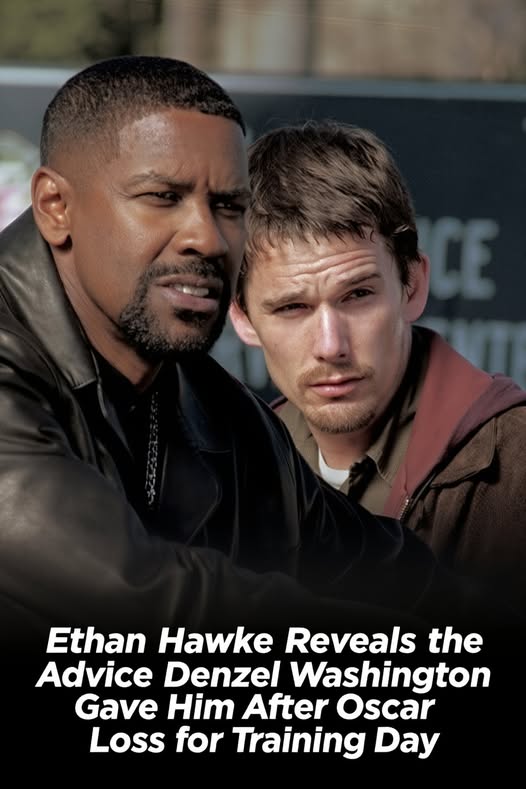
In the high-stakes arena of Hollywood, where golden statuettes can launch careers or shatter dreams, few moments capture the bittersweet alchemy of ambition and humility quite like the 74th Academy Awards in 2002. Ethan Hawke, then a fresh-faced 31-year-old riding the wave of indie cred from the Before trilogy, found himself nominated for Best Supporting Actor for his breakout turn in Training Day. Opposite him loomed the formidable Denzel Washington, whose portrayal of the corrupt LAPD detective Alonzo Harris clinched the night’s Best Actor prize. As Hawke’s name wasn’t called—edged out by Jim Broadbent’s poignant turn in Iris—a quiet whisper from his co-star cut through the applause: “It’s better that you didn’t win. Losing was better.” That pearl of wisdom, delivered with Washington’s trademark gravitas, has lingered in Hawke’s mind for over two decades. Now, in a candid new interview, the 55-year-old Boyhood star is unpacking the advice that reshaped his view of success, calling it a “masterclass in perspective” from one of cinema’s true titans. In an industry obsessed with wins, Washington’s counsel reminds us: True elevation comes from within, not from a pedestal.
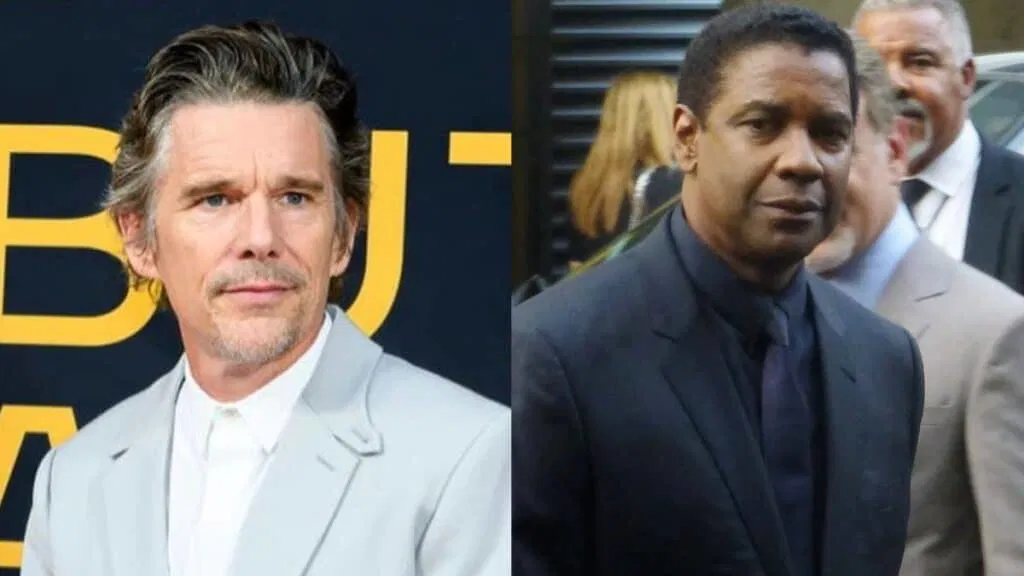
The revelation surfaced during Hawke’s April 2024 appearance on Max’s Who’s Talking to Chris Wallace?, a series that peels back the layers on cultural icons. Host Chris Wallace, probing Hawke’s four Oscar nominations (two for acting, two for writing), zeroed in on the Training Day night. “Is it true that Denzel leaned over and whispered that losing was better?” Wallace asked, referencing a long-circulating anecdote. Hawke, ever the thoughtful raconteur, paused with a wry smile before diving in. “You don’t want an award to improve your status—you want to improve the award’s status,” he paraphrased, distilling Washington’s ethos into a mantra that’s since gone viral on platforms like Reddit and X. “That’s the way he thinks. The Academy Award has more power now ’cause Denzel has a couple. It didn’t elevate who he was.” Hawke likened it to “playing with Babe Ruth”—a nod to Washington’s Babe Ruth-level dominance in acting. “When all is said and done, he’s the greatest actor of our generation,” Hawke added, his voice laced with unfeigned awe. The clip exploded online, racking up over 10 million views across TikTok and YouTube, with fans dubbing it “Denzel’s Whisper Wisdom” and spawning memes of Washington as a spectral Oscar coach.
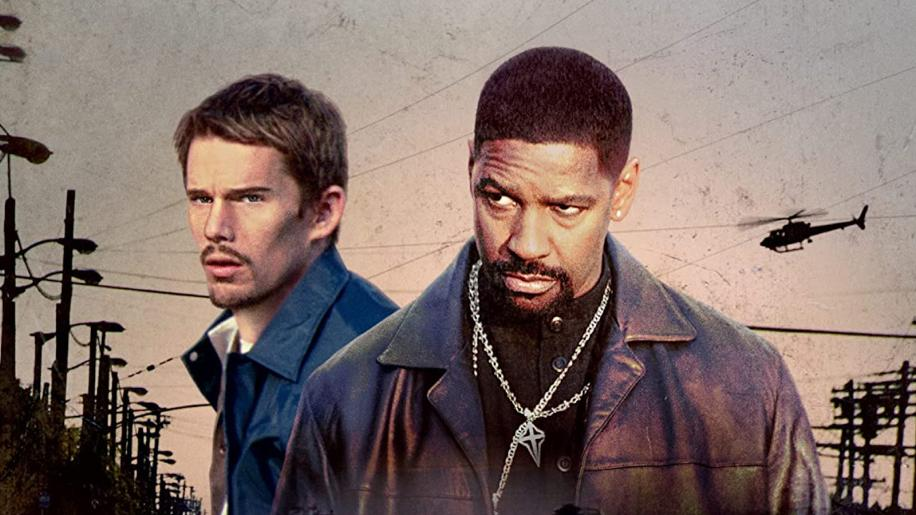
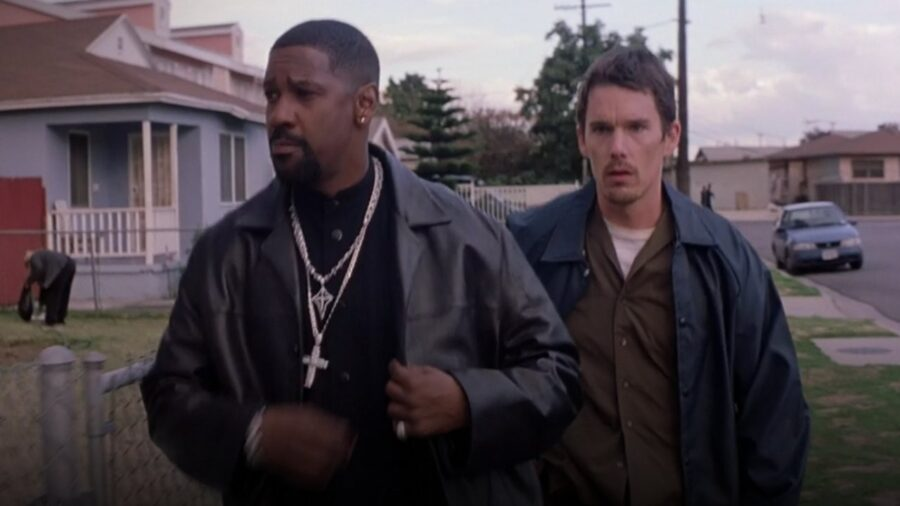
To grasp the weight of that moment, rewind to Training Day‘s feverish production in 2001. Directed by Antoine Fuqua and penned by David A.yer, the gritty crime thriller cast Hawke as idealistic rookie cop Jake Hoyt, thrust into a 24-hour odyssey with Washington’s rogue narcotics officer Alonzo. What began as a tense mentor-protégé dynamic spirals into a moral maelstrom, with Alonzo’s silver tongue and ethical quicksand testing Jake’s every fiber. Hawke’s performance—a raw cocktail of naivety, outrage, and quiet heroism—earned universal acclaim. The New York Times hailed him as “a revelation, his everyman vulnerability anchoring the film’s explosive core,” while Roger Ebert called it “a career-defining gut punch.” Washington’s Alonzo, by contrast, was a tour de force of charismatic villainy—equal parts Shakespearean soliloquy and streetwise menace—that snagged his first lead Oscar (following a Supporting Actor win for Glory in 1989).
The film’s road to the Oscars was electric. Training Day grossed $76 million domestically on a $45 million budget, a sleeper hit that revitalized the cop thriller genre amid post-9/11 cultural shifts. Hawke, nominated alongside heavyweights like Ian McKellen (The Fellowship of the Ring) and Ben Kingsley (A Beautiful Mind), arrived at the Dolby Theatre buzzing with quiet nerves. Seated beside Washington—whom he’d bonded with over late-night script tweaks and on-set chess games—the night felt like a shared summit. When Washington triumphed, his acceptance speech—a poetic blend of gratitude to Sidney Poitier and a call for more Black stories—drew thunderous ovation. But for Hawke, the loss stung, until that sidebar solace.
“You want to improve the award’s status,” Hawke reiterated in the Wallace interview, emphasizing how Washington’s philosophy flipped the script on validation. It’s a mindset rooted in Washington’s own journey: From Fordham journalism dropout to Juilliard-trained thespian, he’s amassed two Oscars, a Tony, three Golden Globes, and an Emmy without ever chasing the “win at all costs” trap. Hawke, who lost again for Boyhood in 2015, credits the advice with sustaining his eclectic career—from indie darlings like The Purge to prestige fare like The Northman. “Denzel saw the long game,” Hawke told Variety in a follow-up chat. “Awards are milestones, not mountaintops. He taught me to let the work whisper.”
The anecdote’s resurgence in 2024—amid Hawke’s buzz for A Complete Unknown (his Bob Dylan biopic) and Washington’s Gladiator II promo—has sparked broader discourse on Oscar psychology. On Reddit’s r/Oscars, a thread titled “Denzel’s Whisper: The Ultimate Loss Pep Talk” garnered 5,000 upvotes, with users sharing their “Denzel-isms” for modern snubs (e.g., Margot Robbie’s Barbie oversight). “Hawke nailed it—Denzel’s the GOAT because he elevates the game, not the other way around,” one commenter wrote. Critics like The Hollywood Reporter‘s Scott Feinberg echoed: “In a town that commodifies trophies, Washington’s whisper is revolutionary—prioritize craft over cachet.” Even Fuqua, reached by CBR, reminisced: “Denzel pulled me aside too after the win: ‘Directors don’t need Oscars; they need stories that stick.’ Ethan’s right—losing sharpens you.”
For Hawke, the lesson permeates his ethos. The Before trilogy scribe (nominated for Sunset and Midnight) has directed (Blaze, 2018) and penned novels (Ash Wednesday), always circling back to ensemble intimacy over solo glory. “Denzel’s voice in my head during every script read: Improve the award,” he laughed on The Tonight Show in May 2024. Their bond endures—Hawke guest-starred on Washington’s short-lived The Book of Eli sequel pitch, and they swapped notes during Hawke’s Moon Knight stint. Washington, prepping his Othello Broadway return, texted Hawke post-interview: “Still whispering truths. Keep elevating.”
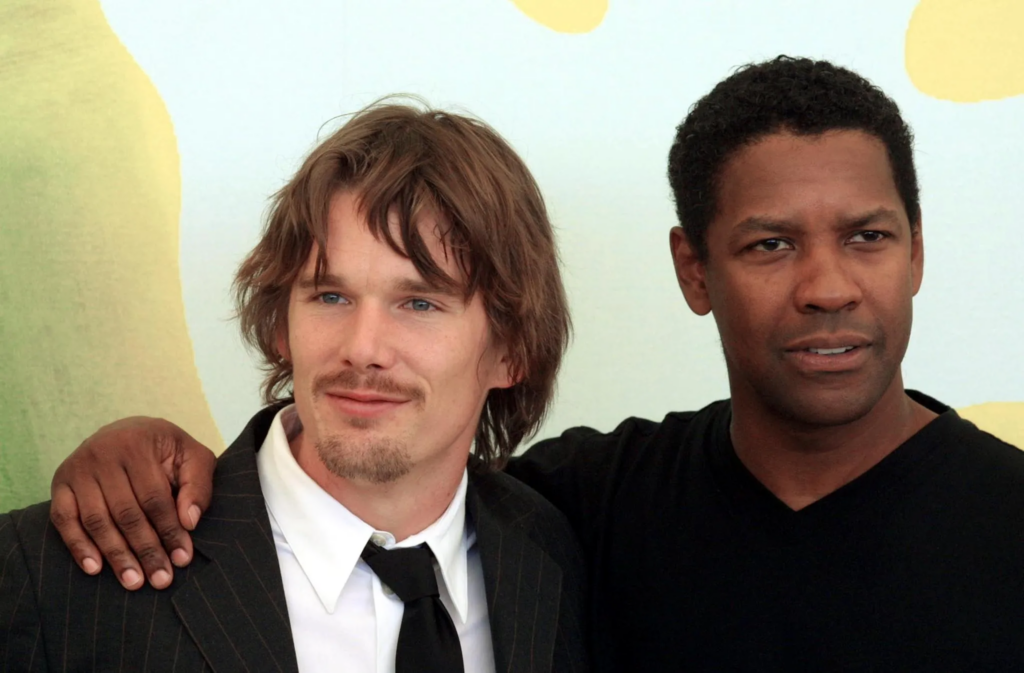
As 2025’s Oscars loom (noms drop January 17), Hawke’s tale feels timely. Amid debates over diversity quotas and streaming slates, Washington’s 2002 whisper cuts through: Success isn’t a win; it’s wielding influence that outlasts the envelope. Hawke, now a four-time nominee sans win, embodies it—his understated power in Strange Angel or The Black Phone proving the award’s status rises with artists like him. “I had already won,” Hawke reflected on Wallace’s show, gazing back at that Dolby seat beside the master. “Sitting next to Denzel, up against McKellen? That’s the real prize.”
In Training Day‘s shadow, where Hoyt unmasks Harris’ empire of corruption, the real drama unfolds off-screen: Mentorship as the ultimate plot twist. Washington’s advice wasn’t consolation—it was consecration, a blueprint for legacy over laurels. As Hawke nears his own potential win (whispers for Unknown), one suspects Denzel’s ghost will whisper again: “Improve the award.” And Hollywood? It’ll be all the richer for it.