Margot Robbie and Jacob Elordi: When Wuthering Heights Turned Collaboration into Creative Codependence

Great screen romances often begin long before the camera rolls—and sometimes, they linger long after the final take. For Margot Robbie and Jacob Elordi, filming Wuthering Heights became exactly that kind of experience: immersive, consuming, and emotionally tethering in ways neither expected. What emerged on set wasn’t just chemistry—it was a shared intensity that mirrored the very souls they were portraying.
A Classic Love Reimagined
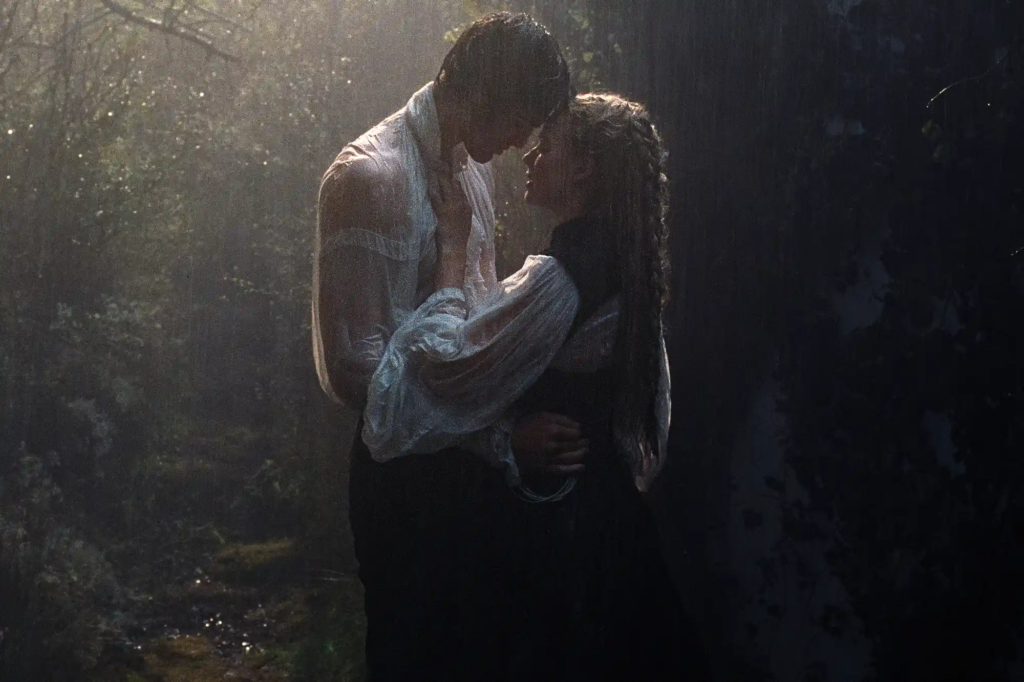
Director Emerald Fennell’s adaptation of Wuthering Heights re-enters Emily Brontë’s tempestuous world with a modern ferocity. The story’s central figures—Catherine Earnshaw and Heathcliff—are lovers bound by obsession, pride, and a love that refuses resolution. Casting Robbie and Elordi as these volatile counterparts raised expectations instantly, and by all accounts, the production delivered something raw and elemental.
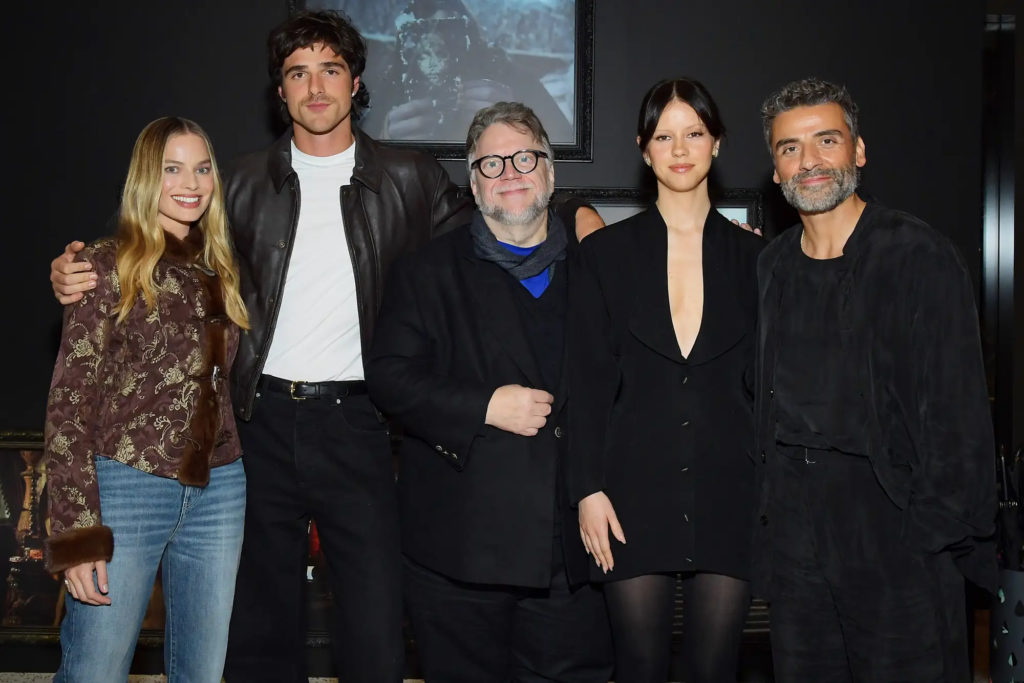
In a cast interview with Fandango, Robbie described how quickly the collaboration deepened. “I’m so codependent with people I work with,” she admitted candidly. “I love everyone so much, and I’m always devastated when a job’s over. I never want it to end. I think I developed that quite quickly with Jacob too.”
Heathcliff in the Corner
Robbie recalled the first days on set with a vivid anecdote that could have been lifted straight from the novel. Elordi, she said, would linger nearby as she worked—always present, always watching.
“I don’t know if Emerald told you to do this or you did this,” Robbie joked, turning to Elordi, “but the first couple of days, he was always in the vicinity where I was, like in a corner, watching Cathy.”
Fennell’s reaction was immediate—and hilarious. “I didn’t tell him to do that,” she quipped, laughing. “I actually had to ask him to leave.”
The exchange captured the playful truth beneath the laughter: Elordi had already slipped into Heathcliff’s orbit, letting the character’s watchful intensity bleed into his process.
When Presence Becomes a Necessity
By the third day of filming, Robbie realized the dynamic had shifted. She found herself scanning the set, unconsciously looking for Elordi. When he wasn’t there, she felt unsteady.
“I was really unnerved and unmoored,” she said. “I felt quite lost—like a kid without their blanket or something.”
The description was striking not just for its honesty, but for how perfectly it echoed Catherine and Heathcliff’s emotional dependence. What began as professional proximity had transformed into something instinctive: a need for the other’s presence to feel grounded in the scene.
Mutual Obsession, Mutual Respect
Elordi didn’t shy away from the sentiment. In fact, he embraced it—openly praising Robbie’s craft and influence.
“We have a mutual obsession,” he said. “If you have the opportunity to share a film set with Margot Robbie, you’re going to make sure you’re within five to ten meters at all times—watching how she drinks tea, how she eats her food. She’s just like an elite actor.”
The comment wasn’t flattery—it was observation. Elordi framed Robbie not as a star to be admired from afar, but as a masterclass in real time. For an actor stepping deeper into complex, character-driven work, that proximity was education.
The Moors, the Music, the Myth
The environment itself played a role in binding the cast together. Filming took place in the English countryside, where the wind-swept Moors feel eternal and unforgiving—an ideal stage for Brontë’s tragedy. To set the mood, the cast even played Wuthering Heights while shooting.
For Elordi, the experience was almost spiritual. Standing on the Moors at sunset, he said, felt like stepping into a living memory—where the echo of Catherine and Heathcliff’s love still hovered in the air.
“You can almost imagine that the spirit of this love that Brontë created is floating around there,” he reflected. “It really did feel like we were catching little pieces of that unrequited love.”
Art Imitating Emotion
What makes this story resonate is how seamlessly the actors’ process mirrored the material. Wuthering Heights isn’t about balance or restraint—it’s about obsession that defies logic. Robbie and Elordi didn’t manufacture that intensity; they allowed it to happen, trusting the story and each other.
That trust extended beyond performance. The film is co-produced by Robbie’s LuckyChap Entertainment—the same company behind Barbie and Saltburn—where she works alongside her husband, Tom Ackerley. Balancing producing responsibilities with an emotionally demanding role could have fractured focus. Instead, it seemed to sharpen it.
A Partnership That Elevates
In many productions, actors protect their space to preserve energy. Here, space dissolved. Robbie and Elordi leaned into each other’s presence, discovering that creative closeness could amplify rather than distract.
Fennell’s decision to occasionally pull Elordi away—“I had to ask him to leave”—underscored the intensity. But it also revealed a director confident enough to let chemistry bloom, then guide it when it threatened to overwhelm the frame.
Why It Matters
Audiences are often told to separate art from process, but moments like this remind us that the most enduring performances are rarely accidental. They are lived, felt, and sometimes shared so closely that boundaries blur.
Robbie’s admission of codependence isn’t a weakness—it’s a declaration of vulnerability in service of truth. Elordi’s hovering wasn’t indulgence—it was devotion to craft. Together, they didn’t just act Catherine and Heathcliff; they allowed the characters to inhabit the space between them.
An Ending—and a Beginning
As filming wrapped, the inevitable separation arrived. For Robbie, that’s always the hardest part. Jobs end. Sets go quiet. The intensity disperses. But what remains is the work—and the invisible thread between collaborators who found something rare together.
Wuthering Heights opens in theaters on February 13, promising audiences a love story as fierce as the wind on the Moors. If the offscreen bond between its leads is any indication, this adaptation won’t simply retell Brontë’s tale—it will feel like it was lived.
And sometimes, that’s the difference between watching a classic and being pulled into it.