A Fighter, A Hustler, A Bond That Survived Everything
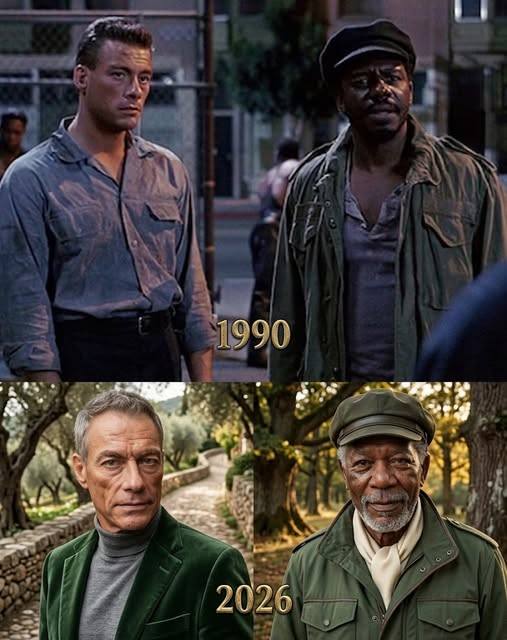
In the dim, sweat-soaked underbelly of the city, where neon lights flickered like dying heartbeats and the roar of the crowd drowned out every moral hesitation, Lionheart emerged not merely as a story of underground fights, but as a raw testament to brotherhood forged in fire. At its core, it wasn’t about broken bones or bloody knuckles. It was about two broken men — one swinging for survival, the other scheming for a way out — who found something rarer than victory: unwavering loyalty in a world that rewarded betrayal.
The underground circuit of Lionheart is merciless. No rules, no referees, no mercy. Fighters step into the makeshift ring — often just chalk lines on concrete in abandoned warehouses — carrying the weight of their pasts. Among them rises Jax, the Fighter. A former soldier discharged after a mission gone wrong, Jax carries scars that run deeper than the ones visible on his skin. He fights not for glory, but for family. His younger sister lies in a hospital bed, medical bills piling up like accusations. Every punch he throws is a desperate prayer for one more day, one more chance to keep her alive. Jax is lionhearted in the truest sense: brave, fierce, and quietly terrified that one day his body will fail the only person who still believes in him.
Then there’s Rico, the Hustler. Sharp-tongued, quick-fingered, and always three steps ahead. Rico didn’t enter the ring to fight — he entered to survive by any means necessary. Orphaned young and hardened by streets that chew up the weak, Rico organizes fights, takes cuts from bets, patches wounds with duct tape and stolen medical supplies, and disappears when things get too hot. He’s charming when he needs to be, ruthless when he has to be. To most, Rico is just another parasite feeding off the violence. But beneath the slick smiles and calculated risks lies a man who has never had anyone stay. Everyone leaves eventually — parents, friends, lovers. The world taught him early: trust is a luxury the broken can’t afford.
Their worlds collide one rain-soaked night when Jax, fresh off a brutal loss, finds himself cornered by debt collectors. Rico, watching from the shadows as always, steps in — not out of pure kindness, but because he sees potential. “You hit like a man with nothing to lose,” Rico tells him, offering a cigarette and a dangerous proposition. “Stick with me, and we both eat.”
What begins as a business arrangement slowly mutates into something neither man can name. Jax teaches Rico what it means to stand for something bigger than yourself. Rico shows Jax how to navigate the gray areas of life, where pure strength isn’t always enough. They become inseparable: the Fighter and the Hustler against a system designed to crush them both.
The story’s power lies in its refusal to romanticize their bond. Lionheart doesn’t shy away from the ugliness. There are moments when trust fractures. When a high-stakes fight goes wrong and Jax ends up in the hospital, Rico has a choice — stay and risk everything he’s built, or run like he always has. For the first time, he stays. He sits by the bed, making calls, pulling favors, even taking a beating from rival crews to buy Jax time to heal. “You’d do it for your sister,” Rico mutters when Jax asks why. “Maybe I’m tired of having no one worth bleeding for.”
Their friendship is tested repeatedly. A corrupt fight promoter tries to force Jax into throwing matches. Rico’s past debts resurface, threatening to drag them both under. There’s a devastating scene where Jax must choose between the biggest payout of his life — enough to save his sister — and protecting Rico from a setup that could end in his death. He chooses loyalty. In the chaos that follows, they fight back-to-back, not just against opponents, but against a world that wants them isolated and defeated.
What makes Lionheart resonate so deeply with fans is its honesty about brokenness. Both men are flawed. Jax’s rage sometimes blinds him. Rico’s survival instincts make him manipulative. Yet in each other, they find the acceptance they’ve craved. One fights for family. The other stays when no one else would. Their bond survives police raids, betrayal from within their circle, devastating losses in the ring, and the slow realization that healing doesn’t mean becoming whole — it means carrying the pieces together.
The underground fights serve as powerful metaphors throughout. Each bout strips them down further, revealing not just physical vulnerability but emotional truth. In one unforgettable sequence, Jax faces his toughest opponent yet — a monster of a man representing everything that’s tried to destroy him. As the fight drags on and Jax begins to falter, he hears Rico’s voice cutting through the crowd: “Get up, lionheart. We still got shit to do.” That single line becomes the heartbeat of the entire narrative.
By the story’s climax, the line between fighter and hustler blurs completely. They no longer operate as two separate individuals but as extensions of one another’s will to survive. The final fight isn’t just about winning money or respect — it’s about proving that their loyalty was never weakness. It was their greatest strength.
Fans never forget Lionheart because it speaks to a universal truth: in our darkest moments, we don’t need saviors. We need someone willing to stay in the chaos with us. Someone who sees our broken edges and doesn’t flinch. Jax and Rico represent the kind of friendship many search for but rarely find — raw, imperfect, and forged in the kind of fire that either destroys or refines.
In a world full of temporary alliances and fair-weather bonds, Lionheart reminds us what it means to have someone in your corner when the lights go down and the crowd disappears. One man fights for blood. The other for survival. Together, they fight for something far more precious: the knowledge that they are no longer alone.