Four Years Later, the Obi-Wan Kenobi Finale Still Stands as One of Star Wars’ Most Powerful Moments
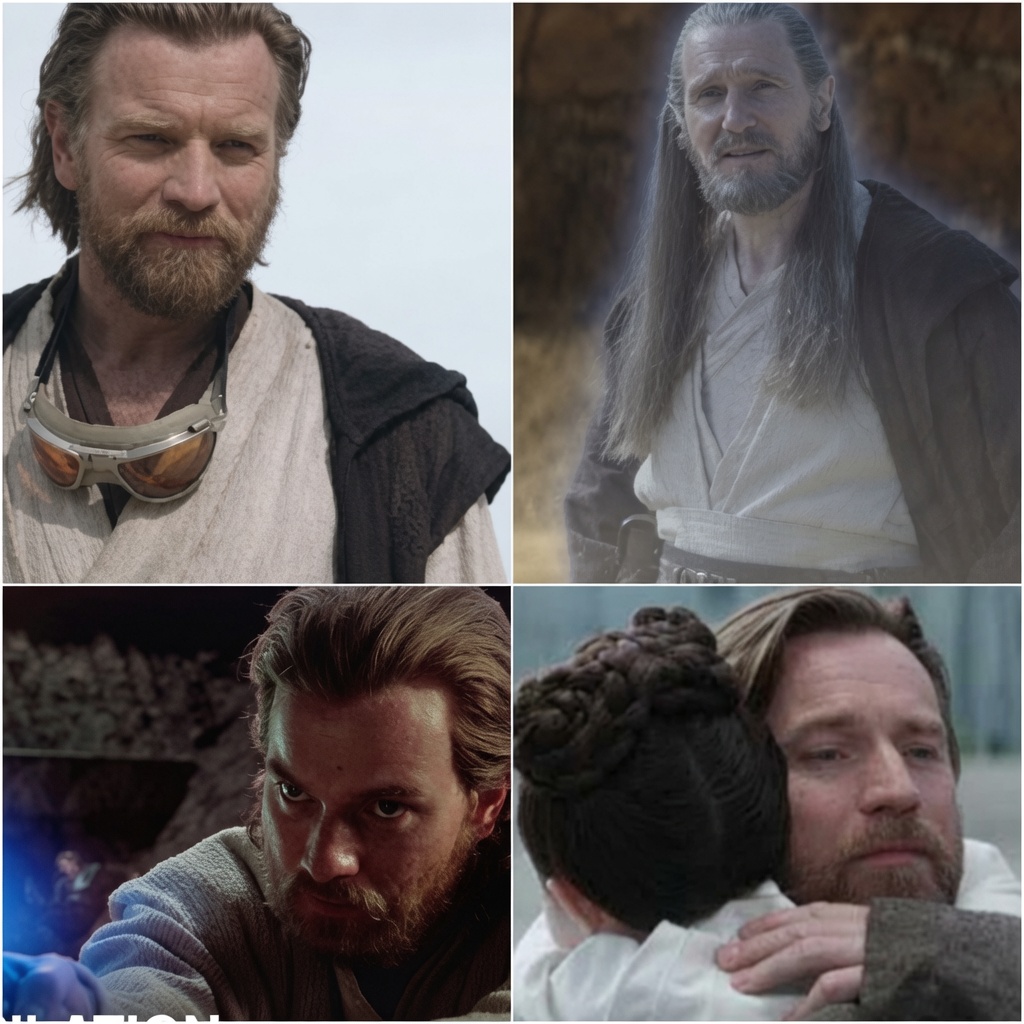
Four years ago today, the finale of Obi-Wan Kenobi premiered and delivered something Star Wars fans had been waiting decades to see: one more heartbreaking confrontation between Obi-Wan Kenobi and Darth Vader.
It was not just another lightsaber duel. It was not simply a dramatic ending to a limited series. It was a deeply emotional chapter in one of the most important relationships in the entire Star Wars saga — a final, painful collision between a master and his fallen apprentice, between the man Obi-Wan loved like a brother and the monster Anakin Skywalker had become.
For many fans, the Obi-Wan Kenobi finale instantly became one of the most unforgettable episodes in modern Star Wars television.
The episode brought together everything the series had been building toward: Obi-Wan’s fear, guilt, grief, and eventual rediscovery of hope. Throughout the series, we saw a broken Jedi Master living in hiding, haunted by the past and burdened by the belief that he had failed Anakin. He was no longer the confident warrior we remembered from the prequels. He was a man carrying the weight of a galaxy’s collapse on his shoulders.
Then came the finale.
When Obi-Wan and Vader finally faced each other again, the scene carried the weight of history. Every swing of the lightsaber felt personal. Every movement echoed Mustafar. Every line of dialogue cut deeper than any blade. This was not a fight about victory or defeat. It was a confrontation between trauma, regret, rage, and love.
And then came the shattered mask.
That moment alone secured the episode’s place in Star Wars history.
As Obi-Wan damaged Vader’s helmet and revealed part of Anakin’s face beneath the armor, the series gave fans one of the most emotionally devastating images in the franchise. For a brief moment, we were not looking only at Darth Vader. We were seeing what remained of Anakin Skywalker — broken, consumed, trapped inside the darkness he had chosen.
Hayden Christensen’s performance in that scene was nothing short of heartbreaking. With only part of his face visible, his voice shifting between Anakin and Vader, he captured the tragedy of the character in a way that words can barely describe. His expression carried pain, hatred, and loss all at once. It reminded fans that Darth Vader was not simply a villain in black armor. He was a fallen hero, a wounded man, and a living symbol of everything the Jedi, the Republic, and Obi-Wan himself had lost.
When Vader tells Obi-Wan that he did not kill Anakin Skywalker — that Vader did — the line lands with devastating force. It gives Obi-Wan the painful permission he had been searching for. For years, he had blamed himself for Anakin’s fall. He believed he had failed his student, his friend, his brother. But in that moment, Vader claims responsibility for Anakin’s destruction.
It is chilling. It is tragic. And in a strange way, it is freeing.
Obi-Wan’s final words to him — “Goodbye, Darth” — are simple, but they carry enormous meaning. He is no longer speaking to Anakin. He is accepting that the man he loved is gone, at least for now. That goodbye becomes a bridge between the prequel trilogy and the original trilogy, helping explain how Obi-Wan could later describe Vader as a separate identity from Anakin Skywalker.
That is what made the finale so powerful. It did not just give fans a rematch. It gave emotional context to the entire saga.
The duel deepened A New Hope. It added new weight to Obi-Wan’s calmness when he later faces Vader on the Death Star. It made his words to Luke more understandable. It strengthened the tragedy of Anakin’s fall and the hope of his eventual redemption. It connected the pain of the prequels with the mythology of the originals in a way that felt meaningful and earned.
Of course, Obi-Wan Kenobi as a series sparked debate among fans. Some loved it from beginning to end. Others had criticisms about pacing, story choices, or production. But even among those who were divided on the series as a whole, the finale remains difficult to dismiss.
Because when Star Wars reaches this level of emotion, it reminds us why the saga has endured for generations.
At its best, Star Wars is not only about spaceships, battles, planets, or lightsabers. It is about people. It is about love, loss, temptation, failure, forgiveness, and hope. It is about the choices that define us and the possibility that even in darkness, redemption may still exist.
The Obi-Wan Kenobi finale understood that.
It gave fans spectacle, but it also gave them heartbreak. It delivered action, but it never forgot the emotional wound at the center of the story. The lightsaber duel was exciting, but the real power came from the silence between the blows, the pain in Obi-Wan’s eyes, and the broken humanity beneath Vader’s mask.
Ewan McGregor brought tremendous depth to Obi-Wan in that final episode. His performance carried years of grief and love. You could see the character remembering the young man he trained, the brother he lost, and the failure he believed he could never escape. By the end of the episode, Obi-Wan was not magically healed, but he had found peace. He had found purpose again. He was ready to become the watchful guardian we know from the original trilogy.
That transformation mattered.
The finale also reminded fans why Hayden Christensen’s return was so meaningful. For years, his portrayal of Anakin was debated, criticized, and later reappreciated by a generation that grew up with the prequels. Seeing him return to the role and deliver such an emotionally powerful performance felt like a full-circle moment. It was not just nostalgia. It was validation of Anakin’s tragedy and Christensen’s place in Star Wars history.
Four years later, the impact of that episode still remains.
Fans continue to revisit the duel. They quote the dialogue. They share clips of the broken mask scene. They discuss how the finale reshaped their understanding of Obi-Wan, Anakin, and Vader. That is the mark of a truly memorable Star Wars moment. It stays with people. It becomes part of the larger mythology. It gives fans something to feel, debate, and remember.
Whether you loved the entire series or had mixed feelings about it, the finale of Obi-Wan Kenobi delivered one of the most powerful chapters in Star Wars television. It gave us the emotional rematch we had waited years to see. It gave Obi-Wan a moment of closure. It gave Vader another layer of tragedy. And it gave fans a scene that will be remembered for years to come.
Four years later, that final confrontation still hurts.
And that is exactly why it worked.