The $4 Billion Deal: How George Lucas Sold “Star Wars” to Disney and Opened a New Era for the Galactic Franchise
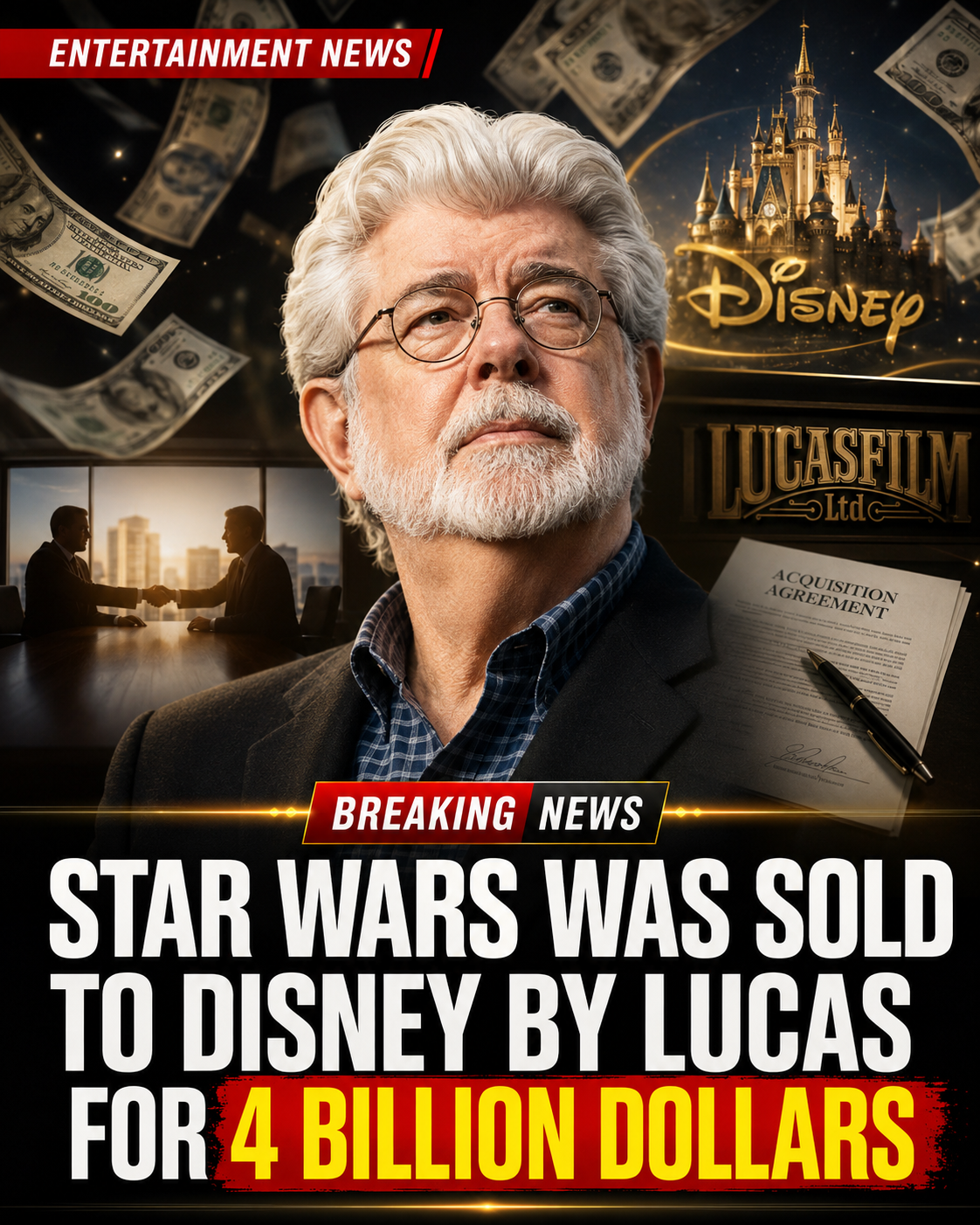
In 2012, the global entertainment industry witnessed one of the most shocking deals in Hollywood history: George Lucas sold Lucasfilm, the company he founded, to The Walt Disney Company for approximately $4.05 billion. This was not simply a corporate acquisition. It was a turning point that changed the future of “Star Wars,” one of the most influential pop culture franchises of all time.
“Star Wars” is not just a science fiction film series. Since the first movie was released in 1977, the franchise has become a worldwide phenomenon, creating a vast universe filled with Jedi, Sith, the Force, the Empire, the Rebel Alliance, space battles, and characters that have remained in the memories of generations of audiences. For millions of fans, “Star Wars” represents childhood, imagination, and the eternal struggle between light and darkness.
That is why the announcement that George Lucas had transferred Lucasfilm to Disney created a wide range of reactions. Some people were excited, believing Disney would bring “Star Wars” back to the big screen in a powerful way. Others were concerned that Disney, as a massive entertainment corporation, might commercialize the franchise too heavily and weaken the personal creative vision that Lucas had built over decades.
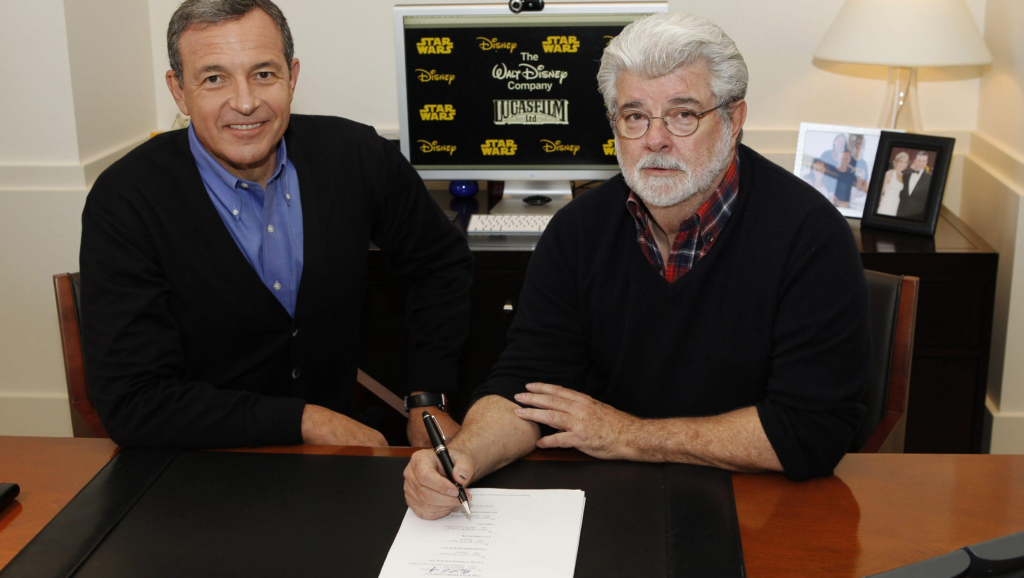
In reality, Lucas’s decision to sell Lucasfilm was a major turning point in his career. After spending many years creating and controlling almost the entire “Star Wars” universe, he chose to pass the franchise to a company with enormous financial strength, global distribution power, advanced production technology, and extensive experience in managing major intellectual properties. Disney had already achieved great success with Pixar and Marvel, so acquiring Lucasfilm was seen as part of its long-term strategy to expand its collection of blockbuster brands.
The value of the $4 billion deal was not only based on the films that had already been released. What Disney bought was an entire cultural empire: character rights, storylines, fictional worlds, the ability to produce new films, television series, video games, toys, comics, books, theme park attractions, and countless related products. With a loyal worldwide fan base, “Star Wars” was almost like a gold mine that could continue to generate value for decades.
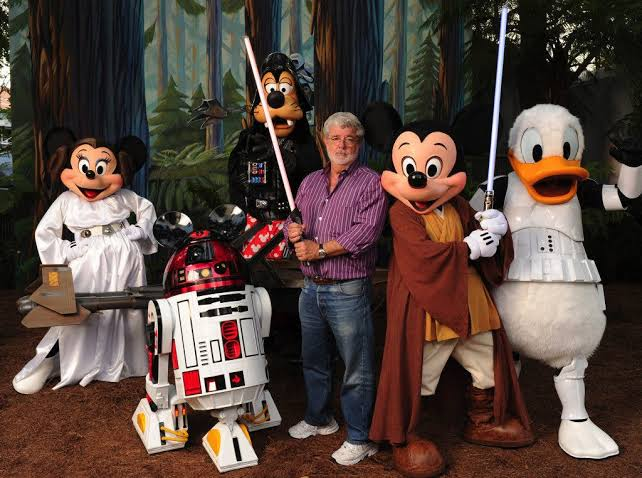
After the deal was completed, Disney quickly launched a new era for “Star Wars.” A sequel trilogy was produced, beginning with “Star Wars: The Force Awakens” in 2015. The film achieved massive box-office success and proved that the appeal of the galaxy far, far away was still incredibly strong. Disney then continued expanding the franchise with spin-off films such as “Rogue One” and “Solo,” along with many television projects for its streaming platform.
The rise of series like “The Mandalorian” showed a new direction for “Star Wars” in the age of streaming. The franchise was no longer dependent only on major theatrical releases. Instead, it expanded through smaller stories, new characters, new settings, and different perspectives within the galaxy. The success of Grogu, widely known by fans as “Baby Yoda,” clearly demonstrated Disney’s ability to create a new cultural phenomenon from an established franchise.
However, the acquisition also brought many debates. Some fans argued that the new films under Disney did not fully preserve the original spirit of “Star Wars.” Controversies over story direction, character development, creative changes, and the heavy commercial use of the brand often divided the fan community. With a legacy as large as “Star Wars,” satisfying every audience member is almost impossible.
Even so, from a business perspective, Disney’s purchase of Lucasfilm proved to be an extremely valuable move. Box-office revenue, merchandise, television rights, streaming content, and theme park experiences have all continued to generate huge returns. The “Star Wars: Galaxy’s Edge” area at Disney theme parks also transformed the fictional world of the films into a real-life experience, allowing fans to step into the planets, spaceships, and stories they once saw only on screen.
For George Lucas, selling Lucasfilm can be seen as a transfer of legacy. He did not simply sell a company; he handed over the future of the greatest creative work of his life to a new generation of filmmakers and producers. Although some people later argued that Disney did not fully follow Lucas’s original ideas, it is undeniable that the deal helped “Star Wars” enter a new chapter and remain alive in popular culture instead of becoming only a memory of classic cinema.
The Disney-Lucasfilm deal also reflected a larger trend in modern Hollywood: major entertainment corporations increasingly focus on franchises that can expand into entire content universes. Instead of producing individual films alone, studios now seek to own worlds that can grow across many platforms, generations, and business models. “Star Wars” is one of the clearest examples of this strategy.
Looking back more than a decade later, George Lucas’s decision to sell “Star Wars” to Disney for more than $4 billion remains one of the most important moments in 21st-century cinema. It raises an interesting question: what happens when a work of art becomes a global commercial asset? Does constant expansion enrich the legacy, or does it dilute the original value?
The answer depends on each fan’s point of view. But one thing is certain: “Star Wars” is still alive, still growing, and still an essential part of popular culture. From George Lucas’s bold idea in 1977 to the billion-dollar Disney deal in 2012, the journey of “Star Wars” proves the extraordinary power of imagination — when a story is powerful enough, it can move beyond the screen and become an entire universe in the minds of millions of people around the world.