Fences
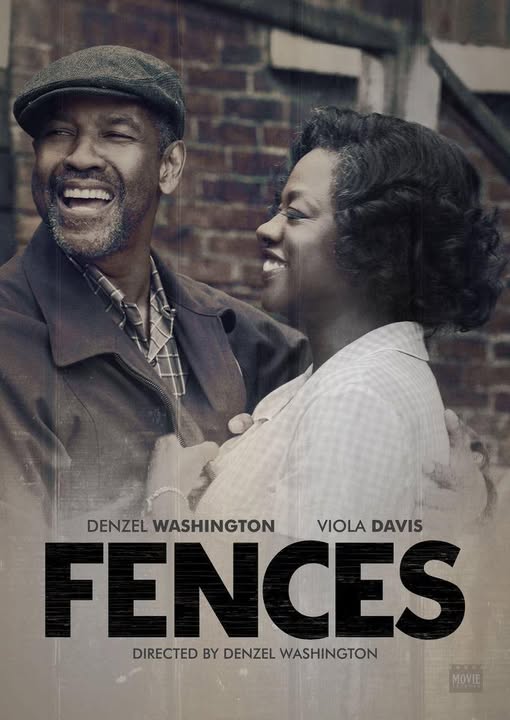
Note: Fences is a film adaptation of August Wilson’s Pulitzer Prize-winning play, directed by and starring Denzel Washington. The movie explores profound themes such as family relationships, racial discrimination, past regrets, and the power of forgiveness. Below is a complete, detailed plot summary in chronological order, including key events and character development. Spoiler warning: This reveals the entire storyline, including the ending.
Setting and Main Characters
- Time and Place: The film is set in Pittsburgh, Pennsylvania, in the 1950s—a period when African Americans were struggling with racial discrimination and limited opportunities. Most of the action takes place in the backyard of the Maxson family home, where a fence is being built, symbolizing protection or confinement.
- Main Characters:
- Troy Maxson (Denzel Washington): A Black garbage collector and former talented baseball player in the Negro Leagues, whose career was derailed by racism. Troy is a strict father, full of resentment, who often recounts his life story as a “tragic hero.”
- Rose Maxson (Viola Davis): Troy’s wife, a resilient woman who loves her family deeply. She represents forgiveness and hope, often praying and singing gospel to overcome hardships.
- Cory Maxson (Jovan Adepo): Troy and Rose’s 17-year-old son, a talented football player pursuing a college scholarship.
- Jim Bono (Stephen McKinley Henderson): Troy’s best friend and coworker, the only one who can advise Troy frankly.
- Lyons Maxson (Russell Hornsby): Troy’s older son from a previous marriage, a musician chasing his jazz dreams and often borrowing money from his father.
- Gabriel Maxson (Mykelti Williamson): Troy’s brother, brain-damaged from World War II, receiving government disability payments that Troy used to buy the house. Gabriel lives with religious delusions, blowing a trumpet to “open the gates of heaven.”
- Raynell Maxson (Saniyya Sidney): Troy’s illegitimate daughter, who appears in the later part of the film.
Opening and Introduction (Early 1950s)
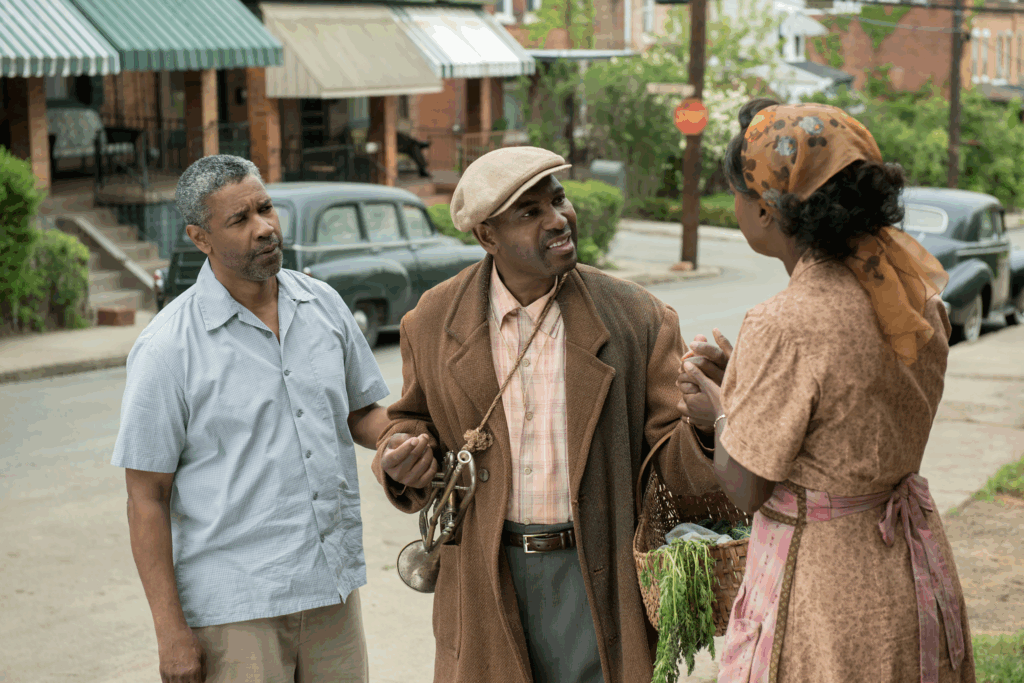
The film opens with Troy and Bono working on garbage collection in Pittsburgh’s streets. Troy complains about racial discrimination: He only got to drive the truck after filing a complaint, while white workers get promotions easily. This introduces Troy’s character—a proud but bitter man who justifies his actions by recounting his past.
In the evening, Troy returns home—a small, rundown house in a Black neighborhood. Rose is doing chores and reminds Troy to build the fence around the backyard as a way to “keep everything together.” Troy mocks the idea as useless but promises to do it. This is a central motif: The fence symbolizes Rose’s protection (keeping the family close) and Troy’s isolation (preventing others from pursuing dreams).
Cory runs into the yard, excited about football practice. His coach invites him to a summer camp for a college scholarship chance. Rose is thrilled, but Troy vehemently opposes it. He recounts his own story: As a Negro Leagues star, Troy was barred from the Major Leagues due to racism (before Jackie Robinson’s era). Troy doesn’t want Cory to fail like him, but deep down, it’s jealousy—he fears his son surpassing his own failures. Troy forbids Cory from playing and forces him to focus on chores and finding a job.
Escalating Family Conflicts
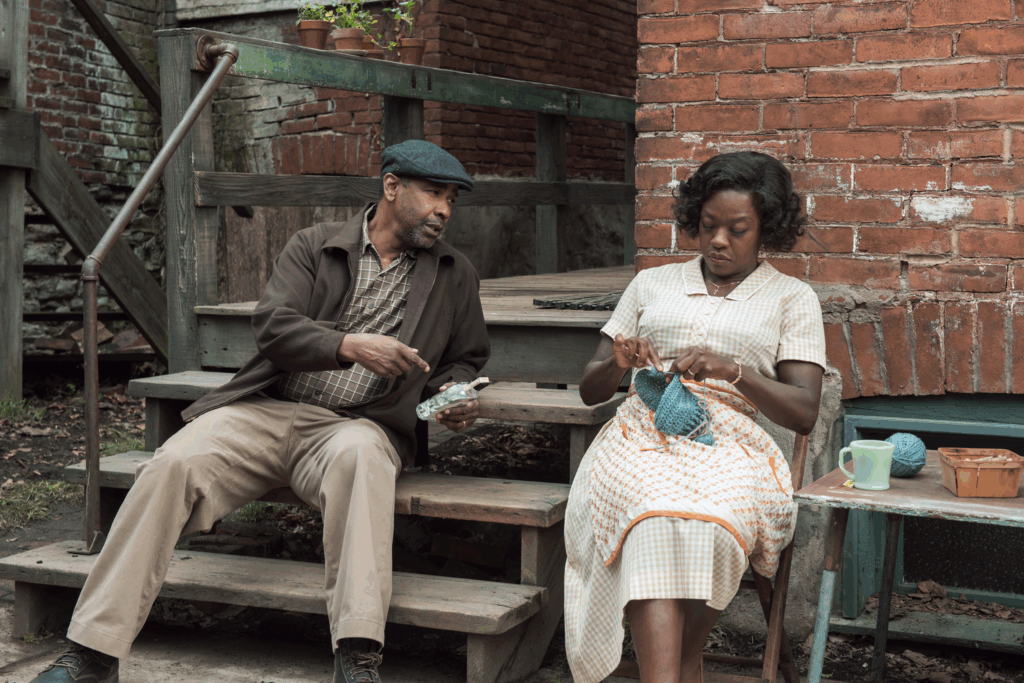
Every Friday, Troy and Bono sit in the backyard drinking beer and talking about life. Lyons visits, borrowing $10 to “pay debts” for his jazz band. Troy gives the money but scolds his son for not having a stable job, calling Lyons a “freeloader.” Rose defends Lyons, noting that Troy once chased his own dream (baseball) and failed.
Gabriel appears frequently, wearing a hat with horns and carrying a trumpet. He believes he’s the archangel Gabriel, guarding the “gates” by blowing his horn. Troy worries about his brother but is ashamed of Gabriel’s wandering and disruptions. Once, Troy has to go to the police station to bail Gabriel out for “disturbing the peace” by blowing his horn in the market. Unbeknownst to him, Troy signs papers redirecting part of Gabriel’s disability payment ($3,000 that Troy used to buy the house) to a mental institution, leading to Gabriel’s commitment later.
Troy begins revealing his infidelity. He has a mistress named Alberta, a woman at a diner he frequents. Bono advises Troy to tell Rose the truth, saying, “Don’t build a fence to keep others out, but to keep what’s precious in.” Troy initially denies it but admits to Bono that he loves Alberta because she “makes him forget his worries.”
Cory continues practicing football behind his father’s back. When Troy finds out via a call from the coach, he explodes, bans Cory from playing, and threatens to kick him out if he disobeys. Cory challenges him: “You’re not a good man, Dad. You’re just a man.” Troy temporarily kicks Cory out, but Rose intervenes, urging Troy to forgive.
Climax: Secrets Revealed (Mid-1950s)
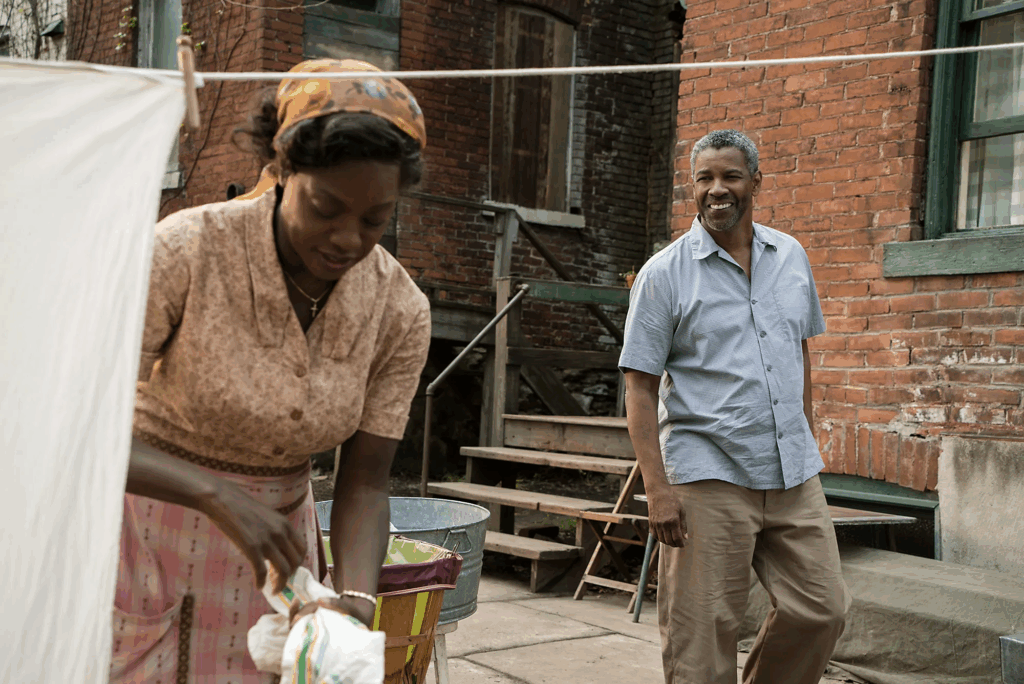
Eight months later, Alberta gives birth to a baby girl, Raynell, but dies from hemorrhage. Troy confronts Rose. In an emotionally charged dialogue scene (shot in one take, per Viola Davis), Troy confesses: “Rose, you’re a wonderful woman… but I need something else.” Rose is devastated, slaps Troy, and yells: “I gave you everything! I built this fence to keep our family together!” In anger, Troy grabs Rose roughly. Cory rushes in, knocks Troy into the unfinished fence. Troy counts this as Cory’s “second strike” (after the earlier argument) and permanently kicks his son out.
Troy raises Raynell alone, hiring a babysitter and struggling with guilt. He finishes the fence, but it becomes a symbol of loneliness. Troy gets promoted to truck supervisor—the first Black man in the company—but the joy is fleeting as he isolates himself.
Later Part: Forgiveness and Legacy (Time Jump – 1965 and Beyond)
The film jumps eight years forward. The fence is now complete, the backyard more serene. Rose, now a widow (Troy died of a heart attack), cares for Raynell as her own. She has forgiven Troy, seeing Raynell as her own “fence”—a way to keep the family from breaking.
Cory returns from the Marines, now a corporal. Lyons is in prison for drug smuggling, and Gabriel has been institutionalized due to the papers Troy signed earlier. The family gathers for Troy’s funeral. Cory refuses to wear the uniform his father once wore, showing lingering resentment. Rose advises: “You have to forgive your father. He was just human, full of flaws.”
Cory talks about battles in Vietnam, where he saw Black comrades treated unfairly—a cycle of the racism Troy faced. Cory plans to leave, but Rose shares her childhood: Her family shattered due to infidelity and death, making her crave an “intact family.” She says: “This fence is to keep us together, not push us apart.”
Cory finally dons the uniform and joins the funeral. Gabriel is released temporarily but can’t blow his trumpet due to illness. He dances and shouts to “open the gates of heaven.” No trumpet sounds, but the clouds part and sunlight shines down—symbolizing Troy’s soul being forgiven and ascending to heaven. The family embraces in tears, finding belated reconciliation.
Themes and Meaning
- The Fence: Not just physical, but emotional barriers. Rose builds it to embrace; Troy builds it to control and hide.
- Legacy and Racism: Troy “protects” Cory from failure but inadvertently repeats society’s wrongs.
- Forgiveness: The film ends with forgiveness, emphasizing family as a place to heal wounds.
Fences is a masterpiece of acting, with Denzel Washington and Viola Davis winning Golden Globes. The 139-minute film focuses on powerful dialogue, with minimal scenes outside the backyard to maintain dramatic intensity. If you haven’t seen it, watch on Netflix or Paramount+ to fully experience its power.
Your point of view caught my eye and was very interesting. Thanks. I have a question for you. https://accounts.binance.info/cs/register-person?ref=OMM3XK51
Your article helped me a lot, is there any more related content? Thanks!
Thanks for sharing. I read many of your blog posts, cool, your blog is very good.
Your article helped me a lot, is there any more related content? Thanks!