The Queen of Oversized Suits: How Julia Roberts Quietly Changed Fashion in 1992
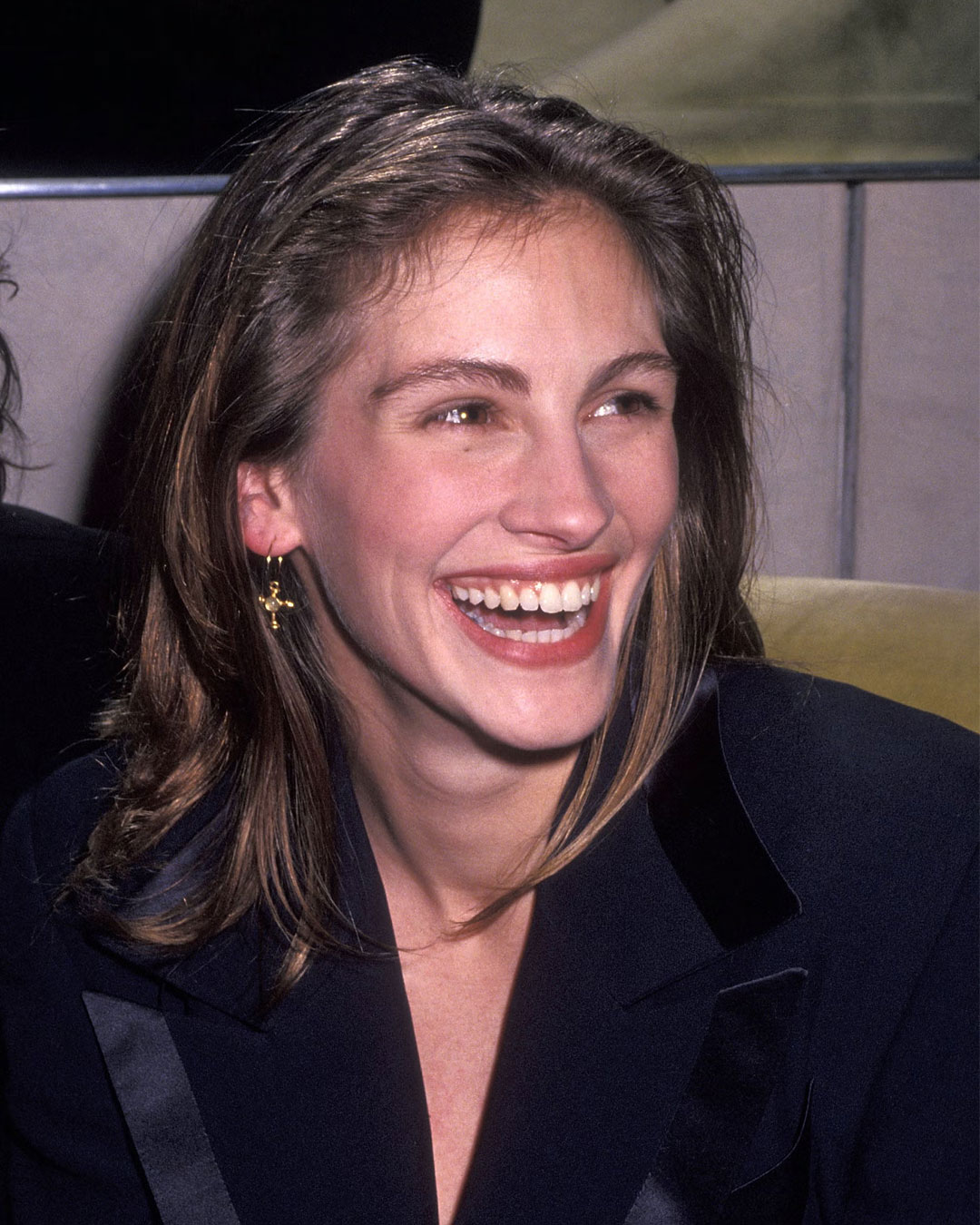
Long before oversized tailoring became a runway staple, a TikTok trend, or a symbol of modern power dressing, one woman stepped into a room and rewrote the rules without saying a word.
In 1992, at a fashion show held at New York City’s iconic Royalton Hotel, Julia Roberts made an appearance that would later be recognized as a turning point in fashion history. Dressed in a bold, oversized suit that defied the era’s expectations of femininity, she didn’t just attend the show — she made the statement.
There were no headlines at first. No grand declarations. Just confidence, posture, and an outfit that felt years ahead of its time.
The Fashion Climate of the Early 1990s
To understand the impact of that moment, it’s important to remember where fashion stood in the early ’90s.
Women on red carpets were expected to be:
- Body-conscious
- Glamorous in a traditional sense
- Hyper-feminine
Power dressing existed, but it was rigid, corporate, and rarely playful. Oversized tailoring — especially on women — was still seen as risky, unfeminine, or experimental.
Then Julia Roberts arrived.

The Royalton Hotel Moment
The Royalton Hotel in New York was more than just a venue — it was a cultural hub. A place where fashion, film, and art collided. When Julia Roberts walked into the space wearing an oversized suit with relaxed shoulders, fluid lines, and unapologetic proportions, the look stood out instantly.
It wasn’t styled to flatter in the conventional sense.
It wasn’t designed to be “sexy.”
It wasn’t trying to impress.
And that was precisely the point.
She wore the suit as if it belonged to her — not borrowed, not ironic, not styled for shock value. The ease with which she carried it transformed the look from unconventional to authoritative.
Oversized as Attitude, Not Trend
What made Julia Roberts different was that she didn’t treat oversized fashion as a gimmick.
She wasn’t hiding behind fabric.
She wasn’t rebelling loudly.
She was claiming space.
The suit became an extension of her personality: confident, relaxed, grounded, and quietly powerful. In an industry obsessed with control — of bodies, of image, of narrative — her choice felt radical in its simplicity.
Fashion insiders would later describe this era as the moment when oversized tailoring shifted from masculine imitation to feminine autonomy.


Cinema Stardom Meets Fashion Authority
By 1992, Julia Roberts was already one of the most recognizable actresses in the world. Pretty Woman had cemented her status as a global star, but her off-screen style told a different story than the roles she played.
On screen, she was often styled in romantic silhouettes.
Off screen, she leaned into tailoring, menswear, and ease.
This contrast made her fashion choices feel intentional rather than reactive. She wasn’t dressing to fit an image — she was dressing to reflect one.
A Blueprint for Future Generations
Looking back now, it’s impossible not to see Julia Roberts’ 1992 oversized suits as a blueprint.
Today’s fashion icons — from red carpets to street style — regularly embrace:
- Oversized blazers
- Relaxed trousers
- Fluid tailoring
What once felt daring is now mainstream.
And yet, few wear it with the same effortlessness that Julia did more than three decades ago.

Why the Look Still Resonates
The reason this moment continues to resonate isn’t nostalgia — it’s relevance.
In an era where fashion conversations increasingly center on:
- Gender fluidity
- Comfort as confidence
- Dressing for self-expression
Julia Roberts’ oversized suits feel startlingly modern.
She wasn’t ahead of the trend.
She was outside of it.
Oversized Fashion as Power Language
Fashion historians often talk about silhouettes as language.
In 1992, Julia Roberts spoke fluently in a language few women were encouraged to use: space.
Her oversized suits didn’t minimize her presence.
They expanded it.
They said:
- I’m comfortable here
- I don’t need to perform femininity
- I define elegance on my own terms
That message has echoed quietly through decades of fashion evolution.


The Legacy of a Quiet Revolution
Julia Roberts didn’t set out to become a fashion revolutionary.
She didn’t launch a brand.
She didn’t lead a campaign.
She didn’t explain her choices.
She simply wore what felt right — and trusted her presence to do the rest.
That quiet confidence is what made the look iconic.
Conclusion: The Crown Was Never Announced — It Was Earned
The title “queen of oversized suits” wasn’t claimed.
It was granted — slowly, retrospectively, and deservedly.
In 1992, at the Royalton Hotel in New York City, Julia Roberts proved that bold fashion didn’t need theatrics. It needed conviction.
Oversized wasn’t a trend.
It was a statement.
And decades later, it still reigns supreme.
S666welcome gives you a generous welcome bonus. I have been playing with it for awhile. Don’t miss it s666welcome.