Julia Fiona Roberts: From Southern Sweetheart to Hollywood Royalty
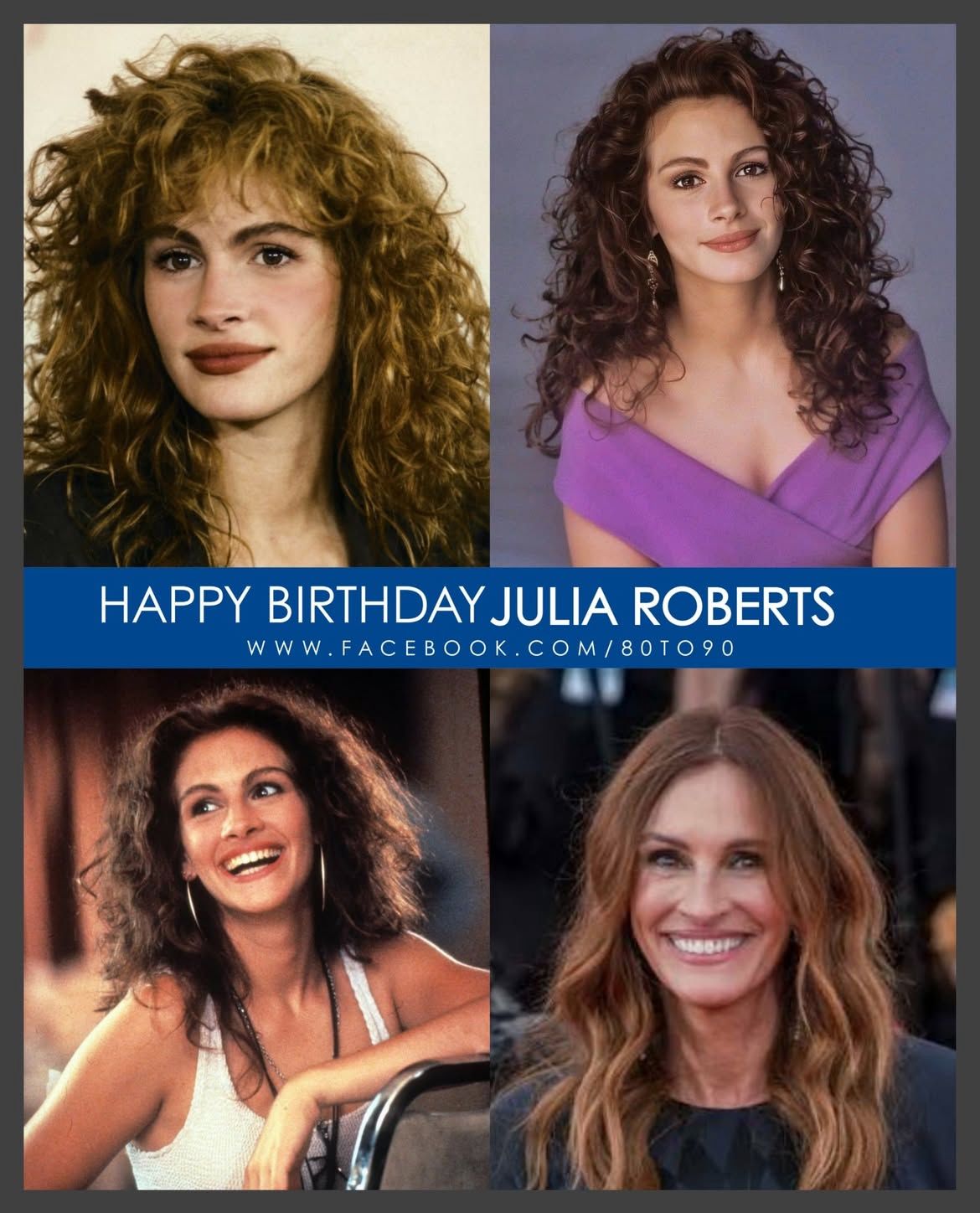
Born on October 28, 1967, in Smyrna, Georgia, Julia Fiona Roberts did not arrive in Hollywood with the certainty of stardom written into her destiny. She arrived instead with something quieter but far more powerful: a natural warmth, an unmistakable presence, and a belief—still untested—that her voice deserved to be heard.
Raised in the American South, Julia’s early years were marked by modesty rather than glamour. She was a shy, bright-eyed girl shaped by small-town rhythms, far removed from red carpets and studio lights. Yet even then, there was an openness to her expression, a sincerity that would one day become her signature. When she eventually made her way to New York and then Hollywood, she did not chase fame with urgency. Fame found her.
That meeting would change cinema history.
The Smile That Changed Everything
In 1990, Pretty Woman introduced Julia Roberts to the world—and the world responded instantly. As Vivian Ward, she transformed what could have been a conventional romantic comedy into something enduring and emotionally resonant. Her performance was radiant, playful, and deeply human.
What audiences noticed first was her smile—wide, unguarded, and luminous. But what kept them watching was her presence. Julia did not merely play Vivian; she gave her dignity, intelligence, and vulnerability. The film became a cultural phenomenon, and Roberts became a global star almost overnight.
At just 22 years old, she was crowned “America’s Sweetheart,” a title that would follow her for years. Yet even in the midst of overwhelming fame, there were early signs that Julia Roberts would never be content with being defined by charm alone.
Beyond the Label of Romance
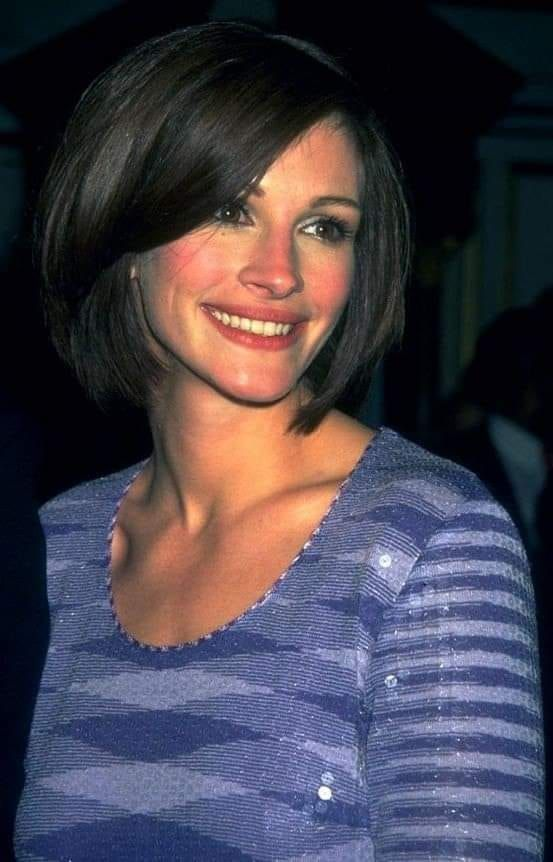
As the 1990s unfolded, Julia Roberts faced a challenge familiar to many actresses who rise quickly through romantic roles: the risk of being confined by expectations. Hollywood loved her warmth, her humor, her accessibility—but Roberts wanted more.
Rather than resisting her romantic image outright, she expanded it. Films like My Best Friend’s Wedding and Notting Hill demonstrated her willingness to subvert genre conventions, playing characters who were flawed, uncertain, and emotionally complex. She brought nuance to love stories, allowing her characters to be imperfect and real.
Then came Erin Brockovich (2000), the role that irrevocably reshaped her career.
As the determined, outspoken legal assistant fighting a powerful corporation, Julia Roberts delivered a performance that was fearless, grounded, and commanding. She stripped away glamour and leaned fully into character, earning widespread acclaim and an Academy Award for Best Actress. It was not just a win—it was a declaration.
Julia Roberts was no longer simply a romantic icon. She was one of Hollywood’s most formidable performers.
Talent, Courage, and Transformation
The success of Erin Brockovich marked a turning point. It revealed the depth that had always existed beneath Julia’s approachable exterior. She was willing to take risks, to appear unpolished, to let strength replace charm when the story demanded it.
In the years that followed, she continued to choose roles that reflected growth rather than comfort. From the introspective journey of Eat Pray Love to more restrained, emotionally layered performances in dramas and thrillers, Roberts demonstrated an understanding that longevity in Hollywood requires evolution.
What set her apart was not reinvention for reinvention’s sake, but authenticity. Each phase of her career felt like a natural progression—an unfolding rather than a performance of change.
Timeless Beauty and Quiet Confidence
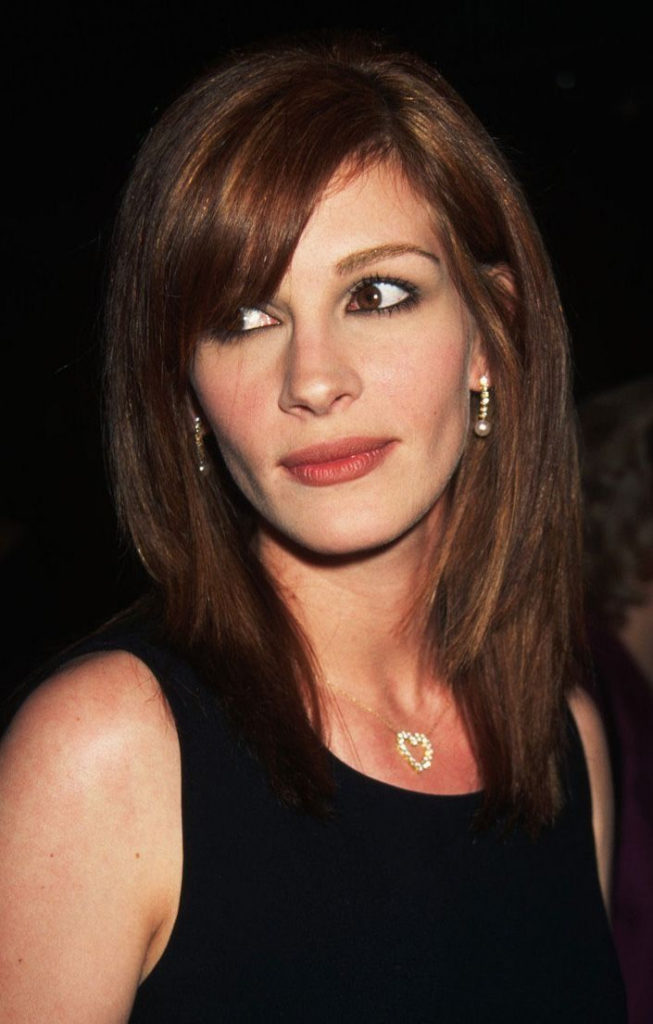
Julia Roberts’ beauty has always defied conventional standards. It was never about perfection or polish. It was about presence.
As she matured, that presence only deepened. She embraced aging not as something to be concealed, but as something to be lived. Her confidence became quieter, more assured. Her style evolved toward simplicity—clean lines, warm tones, effortless tailoring—reflecting a woman fully at ease with herself.
In an industry often obsessed with youth, Julia Roberts became a powerful symbol of enduring grace. She showed that beauty could grow richer with time, that experience adds dimension rather than detracts from allure.
Her calm, knowing gaze today carries decades of life, work, and self-knowledge. It asks nothing of the viewer, yet lingers long after.
Hollywood Royalty, Earned Not Bestowed
The term “Hollywood royalty” is often used loosely, but in Julia Roberts’ case, it feels earned. Her career spans more than three decades, marked not only by box-office success, but by cultural impact.
She has worked with the industry’s greatest directors, shared the screen with generations of actors, and remained relevant without chasing trends. Her power lies not in omnipresence, but in selectivity. When Julia Roberts appears, it matters.
She represents a bridge between eras—a star born in the age of traditional movie icons who has successfully navigated the complexities of modern Hollywood. Her legacy is not built on volume, but on meaning.
A Life Beyond the Screen
Away from the camera, Julia Roberts has cultivated a life grounded in family, privacy, and balance. She has never allowed fame to eclipse her humanity. This grounding has, in many ways, preserved the sincerity audiences first fell in love with.
Her interviews reveal a woman who is thoughtful, humorous, and unpretentious. She speaks of her work with gratitude rather than entitlement, of success with perspective rather than ego. This emotional intelligence is perhaps her most underrated quality—and one that has sustained her through decades in the public eye.
The Legacy of Enduring Grace

Julia Fiona Roberts’ journey—from a Southern girl with big dreams to one of the most respected figures in cinema—is not a story of overnight success alone. It is a story of resilience, courage, and self-trust.
She transformed fame into influence, charm into authority, and longevity into legacy. Her evolution reminds us that true star power does not burn out—it settles, deepens, and shines more steadily with time.
There are certain kinds of beauty—rare and enduring—whose true value is only magnified by years lived fully and honestly. Julia Roberts embodies that truth.
She is no longer merely America’s sweetheart.
She is Hollywood royalty—graceful, grounded, and timeless.
456bet1, gonna try my luck here. Hope the site is user-friendly and pays out quick! 456bet1