Sylvester Stallone at 80: Why Rocky Still Feels Like America’s Greatest Underdog
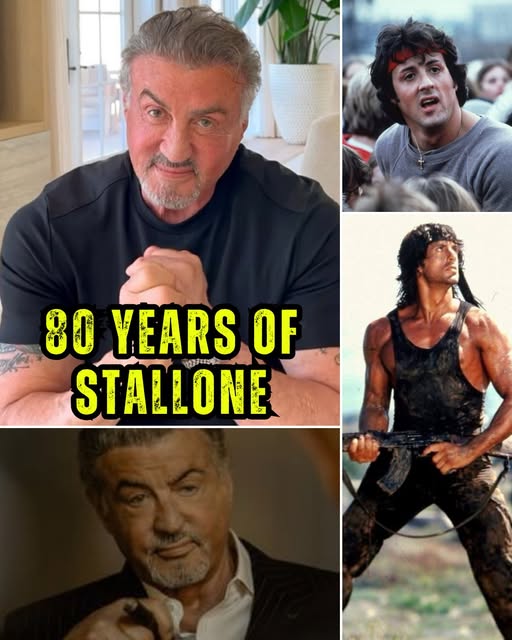
Sylvester Stallone is turning 80 soon, and somehow, Rocky Balboa still feels as alive as ever.
That might sound strange. Rocky is not a new character. He first appeared on screen in 1976, in a film made for a modest budget, led by an actor many people in Hollywood did not fully believe in yet. Nearly five decades later, the world has changed, movies have changed, heroes have changed, and audiences have changed. But Rocky still works.
Not because he is flawless. Not because he is unbeatable. Not because he looks like a superhero.
Rocky works because he feels real.
He was never the smoothest man in the room. He was not rich. He was not polished. He did not speak like a winner. He did not dress like one. He did not live like one. He was a small-time boxer from Philadelphia, a man who seemed to have more scars than chances, more disappointments than victories. He was not introduced as someone destined for greatness. He was introduced as someone life had almost passed by.
And that is exactly why people believed in him.
Rocky Balboa was not trying to become a legend at first. He was not chasing fame, money, or glory in the usual movie-star sense. He just wanted one shot. One chance to stand in the ring and prove that he was not a nobody. That simple dream became one of the most powerful ideas in American cinema.
Because almost everyone understands that feeling.
The feeling of being underestimated. The feeling of being ignored. The feeling of wanting someone, somewhere, to see that you are worth more than what the world has decided you are. Rocky did not need to win the fight to become meaningful. He only needed to last. He only needed to keep standing. He only needed to prove that the heart inside him was stronger than the circumstances around him.
That is why Sylvester Stallone’s legacy is different from many action stars.
Stallone did not become famous only because he looked tough. He became famous because he looked like life had already hit him hard, and he still got up anyway. His face carried struggle. His voice carried bruises. His body looked built not for perfection, but for survival. There was always something wounded beneath the strength, and that made his characters memorable.
Rocky gave audiences hope.
Rambo gave audiences pain.
Cobra gave audiences pure 1980s attitude.
The Expendables gave old-school action fans one more big, loud, explosive reunion.
But underneath all of those characters, there was always the same emotional engine: survival.
That is the real Stallone theme. Not just muscles. Not just punches. Not just guns, sweat, and slow-motion explosions. His best characters are people who have been damaged by the world and somehow refuse to disappear. They are men carrying grief, failure, regret, anger, and loneliness. They are not young forever. They are not clean forever. They are not safe forever. But they keep moving.
That is why Stallone aging into 80 does not feel like the end of the story. In a strange way, it makes the story even bigger.
Many movie stars build their image around youth. They try to freeze time, to stay forever handsome, forever sharp, forever untouched. Stallone’s image was never really about being untouched. It was about being hit and still standing. So age does not destroy the meaning of his screen legacy. Age completes it.
When we look at Stallone now, we are not just seeing a former action hero getting older. We are seeing the long result of a career built on bruises, comebacks, risks, failures, reinventions, and impossible second chances.
That is very Rocky.
The original Rocky was not only a boxing movie. It was a story about dignity. The fight with Apollo Creed mattered, but the real battle was inside Rocky himself. Could he believe that his life meant something? Could he prove it to himself before he proved it to anyone else? Could he go the distance, even if the world expected him to fall?
That question still matters.
In every generation, people find themselves facing some version of that fight. Maybe it is not in a boxing ring. Maybe it is in a job, a family, a dream, a loss, a comeback, or a private struggle no one else sees. Rocky remains powerful because he speaks to the person who is tired but not finished. The person who has been counted out but is still breathing. The person who knows they may not win in the perfect way, but still wants to stand up and be seen.
That is why Rocky is still one of the most American underdogs ever created.
He represents a version of America that is not glamorous or easy. A version made of cold streets, small apartments, unpaid bills, broken dreams, and stubborn hope. Rocky’s Philadelphia was not a fantasy world. It felt rough, gray, and lived-in. His victory was not about becoming better than everyone else. It was about becoming more than what he thought he could be.
Stallone understood that because Rocky was also personal to him.
Before the film changed his life, Stallone himself was struggling. He was not Hollywood royalty. He was not the obvious choice. His determination to play Rocky himself became part of the legend. In many ways, the story behind the movie mirrored the story inside the movie: an unlikely fighter demanding a chance.
That connection is why the character never felt fake. Rocky was not a costume Stallone wore. Rocky felt like something he had survived.
Then came Rambo, a very different kind of icon. If Rocky was about hope, John Rambo was about pain. First Blood was not simply an action film about a dangerous man. It was about a wounded veteran who came home and found that peace was not waiting for him. Rambo became larger and louder in later films, but the original character was rooted in trauma. Again, Stallone was playing strength with damage underneath it.
Cobra, on the other hand, was pure 1980s style: sunglasses, leather gloves, crime-ridden streets, and hard-edged attitude. It was not subtle, but it became part of Stallone’s screen mythology. He knew how to embody an era. He knew how to give audiences the kind of larger-than-life figure they wanted, even when critics did not always understand the appeal.
And then The Expendables arrived as a celebration of the action stars who shaped an entire generation of movie fans. It was loud, nostalgic, and unapologetic. For audiences who grew up on old-school action cinema, it felt like one final reunion of giants. Stallone was not just starring in it. He was gathering the tribe.
That is another part of his legacy: he became a bridge between eras.
He belongs to the gritty 1970s, the explosive 1980s, the blockbuster 1990s, and the nostalgia-driven 2000s and beyond. Few stars have survived that many Hollywood changes while still remaining instantly recognizable. His career has had highs and lows, beloved classics and questionable choices, critical praise and critical mockery. But that only makes the story feel more human.
A perfect career would not feel like Stallone.
His career needed bruises.
It needed comebacks.
It needed big swings.
It needed characters that people still argue about decades later.
That is what makes a legend. Not a clean record. Not universal approval. Not a life without failure. A legend is someone whose work stays in the conversation. Someone whose characters become bigger than the films themselves. Someone who creates images, lines, emotions, and stories that refuse to disappear.
Rocky running up the steps. Rocky calling for Adrian. Rocky standing across from Apollo Creed. Rambo alone in the woods. Cobra with the matchstick. Barney Ross bringing the old guard back together.
These images still mean something because Stallone gave them weight. He made strength look painful. He made toughness look lonely. He made survival look heroic.
As Stallone approaches 80, his legacy is not just about action cinema. It is about endurance. It is about the strange beauty of not giving up, even when time, failure, critics, and circumstances keep swinging.
Rocky still feels like the most American underdog because he never promised that life would be easy. He only promised that standing back up mattered.
And maybe that is why, after all these years, audiences still care.
Because somewhere inside every great Stallone character is the same message:
You can be bruised.
You can be tired.
You can be counted out.
But you are not finished.
Not yet.
555
555
555
555
5550″XOR(555*if(now()=sysdate(),sleep(15),0))XOR”Z
555′”
555
Honestly, the cultural depth in PHCash APK is noted, but remember risk management! Don’t let the ‘ancestral wisdom’ overshadow smart spending. Check out PHCash APK login first.