Total Dominance: Inside Hollywood’s Sovereign Action Continuum
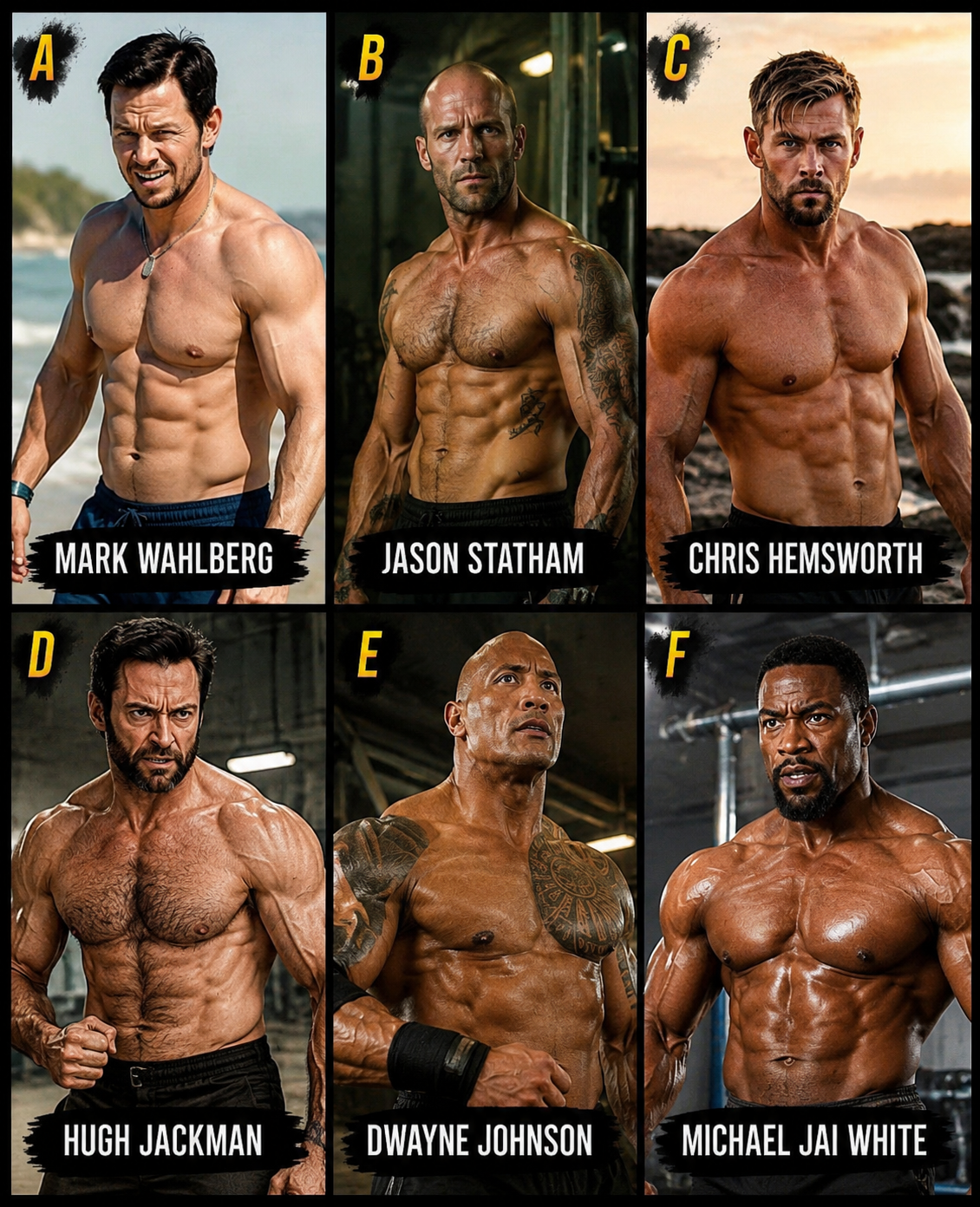
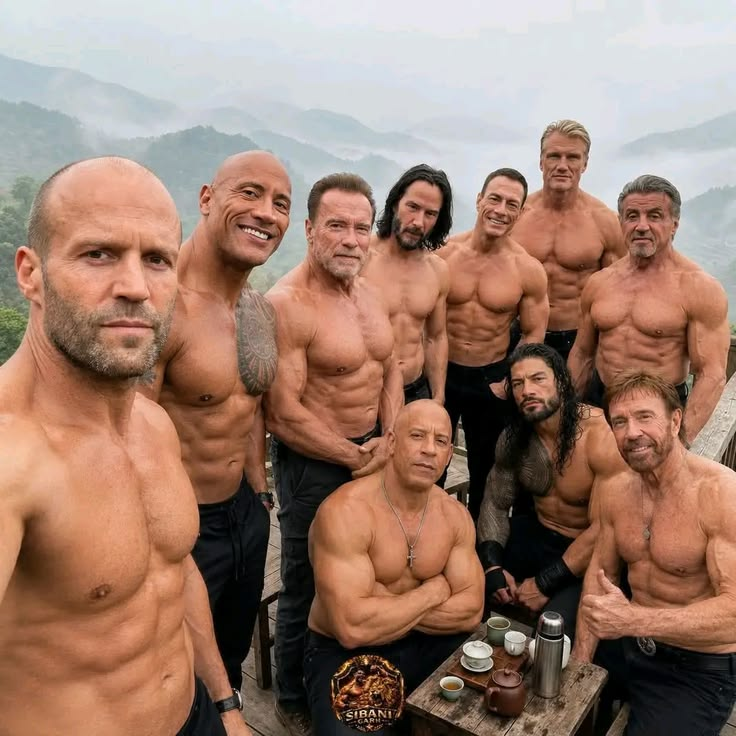
Hollywood action has always been built on spectacle, but only a rare group of performers have managed to turn physical presence into a cinematic language of its own. Explosions can be staged. Fight scenes can be edited. Muscle can be enhanced by lighting, camera angles, and costume design. But true screen dominance comes from something harder to fake: discipline, athletic credibility, physical control, and the ability to make an audience believe every hit, every chase, every stare-down, and every impossible comeback.
That is what separates ordinary action stars from the elite.
Across modern cinema, six names stand as pillars of this physical-action legacy: Jason Statham, Mark Wahlberg, Dwayne Johnson, Chris Hemsworth, Hugh Jackman, and Michael Jai White. Each of them represents a different branch of Hollywood’s action evolution, yet together they form something larger — a continuum of strength, screen authority, and performance maturity.
This is not just about having a powerful body. It is about building an identity that the audience immediately understands the moment the actor appears on screen.
Jason Statham represents precision. Before becoming one of cinema’s most reliable action figures, his background in competitive diving helped shape the physical control that later defined his screen persona. His action style is compact, fast, and brutally efficient. Whether behind the wheel, in close-quarters combat, or moving through a high-risk stunt sequence, Statham’s appeal comes from authenticity. He never feels like a performer pretending to be dangerous. He feels like someone who has already calculated the room before the fight begins.
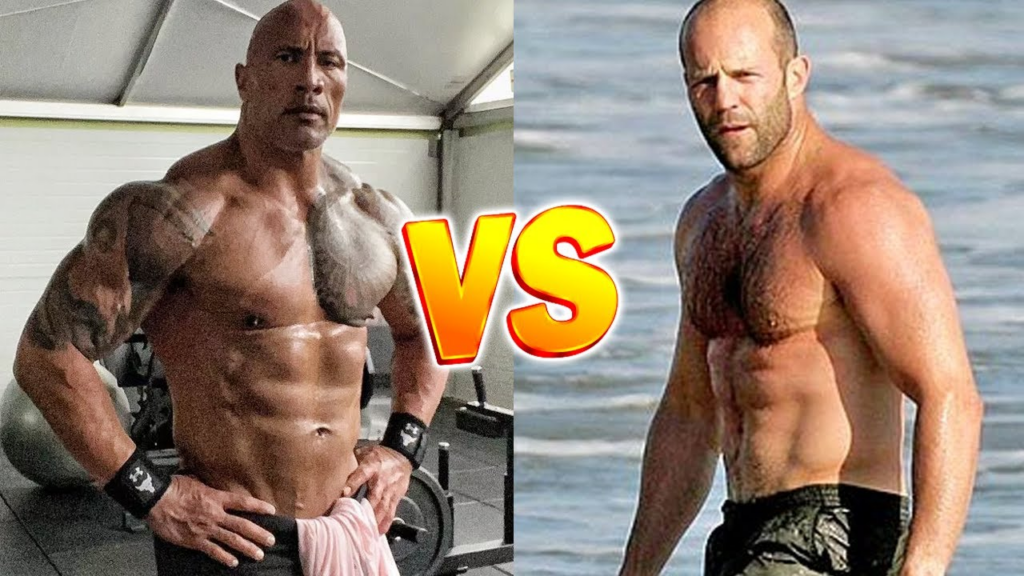
Mark Wahlberg brings a different kind of force. His action identity is rooted in grit, endurance, and functional strength. He is not usually presented as an untouchable superhero figure. Instead, his best roles often rely on toughness that feels grounded, working-class, and human. Wahlberg’s physicality carries the weight of someone who fights through exhaustion, pain, and pressure. That realism has allowed him to move through crime thrillers, military dramas, survival stories, and blockbuster action with a presence that feels direct and believable.
Then there is Dwayne Johnson — one of the most instantly recognizable physical silhouettes in global entertainment. Johnson changed the scale of the modern action hero. His presence is not subtle, and it is not meant to be. He brings the energy of a powerhouse: massive, charismatic, confident, and built for spectacle. What makes him so effective is the combination of size and personality. He can dominate a frame physically, but he also understands humor, timing, and audience connection. In many ways, Johnson turned physical dominance into a worldwide brand.
Chris Hemsworth helped redefine what comic book cinema could look like at its physical peak. His transformation into a mythic warrior figure raised the standard for superhero embodiment. He did not simply wear the costume — he built a body and presence that made the fantasy believable. Hemsworth’s action legacy lies in the balance between godlike scale and emotional accessibility. He brought ancient-warrior power into mainstream blockbuster storytelling and helped create one of the most recognizable heroic images of the modern era.
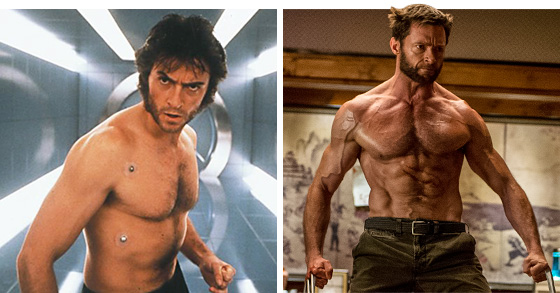
Hugh Jackman belongs to an even rarer category: longevity. For years, he maintained one of the most demanding physical roles in comic book cinema, returning again and again with a level of intensity that seemed almost impossible to sustain. His action identity is built on rage, vulnerability, discipline, and endurance. Jackman’s physical transformation was never only about aesthetics. It was about character. Every scar, every vein, every movement contributed to the image of a man carrying pain inside his body. That is why his performances continue to resonate beyond the usual superhero formula.
Michael Jai White stands as one of the purest examples of technical martial arts credibility in Hollywood action. While many actors train for specific roles, White brings a lifelong foundation of combat discipline to the screen. His fight scenes carry a level of control, speed, and authority that cannot be easily manufactured. He represents the martial arts branch of the action continuum — where physical power must be matched by technique, timing, and real skill. In a genre often dominated by editing tricks, White’s execution reminds audiences what authentic combat performance looks like.
Together, these six performers reveal the many forms action dominance can take.
Statham is precision.
Wahlberg is grit.
Johnson is scale.
Hemsworth is myth.
Jackman is longevity.
White is technique.
That combination explains why their influence continues to shape global action cinema. They did not simply follow Hollywood’s traditional action-star blueprint. They expanded it. They proved that an action icon could be an athlete, a fighter, a superhero, a survivor, a warrior, a technician, or a larger-than-life force of nature.
Their careers also show how much the genre has changed. In earlier eras, action stars were often defined by one signature style: the martial artist, the muscle-bound hero, the cop, the soldier, the lone avenger. But modern audiences expect more. They want realism, emotional weight, physical transformation, and a sense that the actor has truly committed to the role. These six stars helped raise that expectation.
Their bodies became part of the storytelling. Their training became part of the marketing. Their discipline became part of the myth.
That is why they remain so compelling. They are not only actors in action films — they are symbols of physical accountability. They remind viewers that the best action cinema is not built only in the editing room. It begins long before the cameras roll, in gyms, training facilities, fight rehearsals, stunt preparation, diet discipline, and years of personal sacrifice.
Hollywood can create digital worlds, impossible vehicles, collapsing cities, and supernatural enemies. But the audience still responds most strongly to the human body under pressure. A clenched jaw. A controlled punch. A sprint through fire. A stare before battle. A hero who looks like he has earned the right to stand in the frame.
That is the power of this action continuum.
Jason Statham, Mark Wahlberg, Dwayne Johnson, Chris Hemsworth, Hugh Jackman, and Michael Jai White each carved their own path through the industry. But together, they represent a gold standard — not only for strength, but for commitment.
They are proof that true action dominance is not about looking powerful for one scene.
It is about building a legacy strong enough to define an entire genre.
The concept of ‘screen authority’ mirrors professional mastery. Whether it’s a stuntman’s precision or managing complex risk, the audience (or client) demands credibility. This disciplined approach to performance-whether on set or when engaging with high-stakes entertainment like TA77 com-is the true pillar of enduring success.